VMware set to lose its 20-year virtualization lead as deadlines loom
VMware is about to lose its status as the unchallenged leader of the server virtualization market after a 20-year reign, according to an analysis piece in The Register. The author argues Broadcom, which owns VMware, does not mind this outcome, but that it also marks an industry-wide end to significant innovation in traditional server virtualization.
Before Broadcom's acquisition, VMware had about 350,000 customers and more than half of the server virtualization market. Broadcom has all but said it is interested in retaining only 10,000 to 30,000 of those customers, the ones who need its VMware Cloud Foundation (VCF) bundle and will go all in on it as their infrastructure and DevOps platform. Broadcom no longer sells the standalone vSphere and vCenter products that most smaller VMware users relied on; they now come only as components of VCF, a bundle of compute, storage and networking virtualization tools that assembles a private cloud. Broadcom says it sells VCF for less than pre-acquisition VMware charged, but the bundle is nearly always considerably more expensive than a user's last VMware bill, in part because customers end up paying for components they do not use.
Three dates will make Broadcom's intentions clear. November 22, 2026 is the third anniversary of the acquisition, and the point at which many multi-year subscriptions that customers rushed to buy before the deal closed will expire. March 31, 2027 is when VMware's contracts with many members of its Cloud Service Provider (VCSP) program expire, cutting off partners who resell VMware-powered cloud VMs and forcing their customers to find a new home, typically by buying a VCF license directly from Broadcom. October 11, 2027 is the last day of support for VMware Cloud Foundation version 8, forcing a decision to upgrade to VCF 9 or move elsewhere.
The piece cites concrete departures. Adam Centorrino, CEO of Australian services outfit Centorrino, moved from VMware to SUSE ahead of the March 2027 deadline that ends his VMware partnership, and is trying to bring his clients with him; he told The Register he is not angry, since he sees the decision to cut him as a dispassionate business call, but he is baffled given that his clientele includes government agencies other vendors would prize. Tesco and Allstate are named as high-profile customers who are angry enough with Broadcom to fight it out in court. Third-party support firm Rimini Street told the author its VMware support offering is currently its fastest-growing service, albeit from a low base. Cisco has built its own hypervisor to give customers an alternative.
Even VMware's rivals concede none of their products fully matches it, and none has a team to match what the piece calls VMware's corps of virtualization specialists, among vendors including Red Hat, Acronis, Sangfor, Nutanix and SUSE. At the lower end, small vendors have put a simple front end on Linux KVM and built modest server-virtualization businesses from VMware refugees; Acronis and Parallels are courting former VMware partners so they can keep offering rentable cloud VMs. Sangfor is described as nearly alone among rivals in having a memory-tiering offering to match VMware's, though the piece notes Sangfor is less keen to discuss its Chinese origins. At the higher end, vendors are pitching Kubernetes distributions and positioning themselves for AI workloads rather than trying to out-innovate VMware on virtualization itself. Nutanix is said to be winning hundreds of former VMware customers per quarter. Red Hat has won over $680 million in virtualization orders from a standing start, and the piece says Red Hat is the only rival VMware truly fears, being seen as the most mature Kubernetes platform and now also a competent place to host VMs. HPE has entered the market with its VM Essentials product, closer to vSphere than a private cloud, and reports what the company calls "high double-digit new logos growth." Proxmox is called the challenger brand, comfortably handling basic server virtualization, pushing into larger datacenters via Kubernetes integration, and drawing enthusiastic admins.
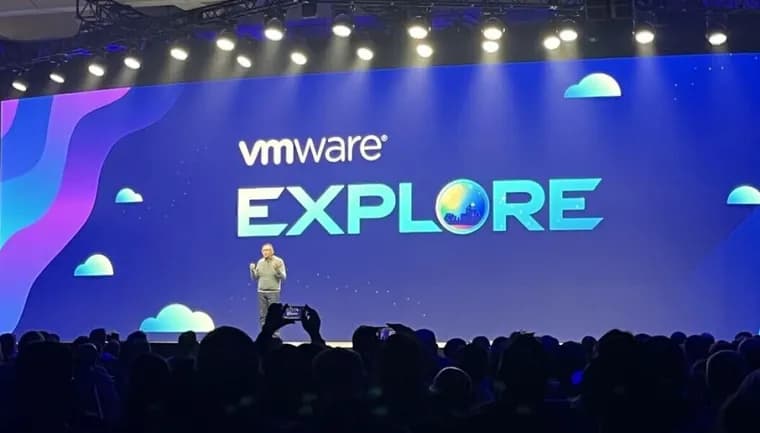
The author's overall prediction: VMware will likely end up with most of the customers it wants and may remain the single largest virtualization vendor by customer count, but more users overall will end up running rival technology, mostly some form of KVM, than VMware's ESXi. VMware will therefore often be just one infrastructure provider within a customer's environment rather than owning the account outright, which the piece says will push VMware to do more with cloud-native apps, not just VMs. The author does not expect a major strategy change to be announced at VMware's user conference this week, but expects further enhancements aimed at making VCF a stronger container and AI platform, a pitch around its memory-tiering technology as an answer to high hardware prices, and possibly easier support for older hardware or Arm-based hyperscaler servers. The piece expects VMware to let all three deadlines pass without public mention.
Key facts
- Before Broadcom's acquisition VMware had about 350,000 customers and over half the server virtualization market; Broadcom is now said to want only 10,000 to 30,000 of them, the ones who will go all in on its VCF bundle.
- Three deadlines drive the shift: November 22, 2026 (expiry of pre-acquisition multi-year subscriptions), March 31, 2027 (VMware's VCSP partner-program contracts expire), and October 11, 2027 (end of support for VMware Cloud Foundation 8).
- Rivals are gaining measurable ground: Nutanix wins hundreds of former VMware customers per quarter, Red Hat has taken in over $680 million in virtualization orders from zero, and HPE's VM Essentials reports "high double-digit new logos growth."
- High-profile customers Tesco and Allstate are heading to court against Broadcom, while Centorrino CEO Adam Centorrino has already moved his practice from VMware to SUSE ahead of the March 2027 deadline.
- Even rivals concede no platform fully matches VMware's; the analysis expects VMware to remain the largest vendor by customer count even as, in aggregate, more users end up on rival tech (mostly KVM-based) than on ESXi.
Why it matters
For twenty years VMware set the pace for server virtualization almost unopposed. Broadcom's ownership is now trading that dominance for profitability: it is content to shed the bulk of VMware's roughly 350,000 pre-acquisition customers so long as it keeps the 10,000 to 30,000 who will commit fully to its VCF bundle. The analysis argues this marks an industry-wide end to serious innovation in traditional server virtualization, since the vendors chasing the customers VMware is letting go are mostly competing to be "good enough," not to out-build VMware's technology.
Who it affects
Directly, the IT and infrastructure teams at the large share of VMware's former customer base that falls outside Broadcom's target segment, who now face higher VCF bundle costs even for components they do not use. It affects VMware's former channel partners in the VCSP program, who lose their ability to resell VMware-powered cloud VMs after March 2027 and must find another platform to bring their own clients to, as Centorrino is doing with SUSE. It also affects large enterprise customers like Tesco and Allstate, now in dispute with Broadcom, and the wider field of rival vendors, including Nutanix, Red Hat, HPE, Proxmox, SUSE, Acronis, Sangfor and Cisco, all competing for the customers VMware is shedding.
How to use it
The piece frames its three dates as concrete planning deadlines for anyone still running VMware infrastructure: check whether pre-acquisition multi-year subscriptions lapse around November 22, 2026; if relying on a VMware Cloud Service Provider partner, arrange an alternative before that partner's VCSP contract expires on March 31, 2027; and plan an upgrade to VCF 9 or a migration elsewhere before support for VCF 8 ends on October 11, 2027. Broadcom is reported as intending to let all three dates pass without drawing attention to them, so the onus is on customers to track them themselves.
How solid is it
This is a labeled analysis piece by The Register, not a company announcement, built on the author's own reporting: a named on-record source (Centorrino CEO Adam Centorrino), a named but not individually quoted source (Rimini Street), and unnamed sourcing described as conversations with rival vendors ("I've spoken to plenty of them") and industry contacts ("I'm told"). The performance figures cited for rivals, Red Hat's over $680 million in orders and HPE's "high double-digit new logos growth," are self-reported by those companies rather than independently audited. The author's forecast about what VMware will and will not announce at its user conference this week is explicitly framed as the author's own expectation ("I suspect"), not a confirmed plan.
Risks and caveats
Read this as informed market analysis and opinion, not confirmed fact from VMware or Broadcom. The piece does not say whether Tesco and Allstate have already filed suit against Broadcom or are only expected to; it states only that they will "fight it out in court." No total VCF price or revenue figures are given, only the general claim that VCF bundle costs run considerably higher than customers' prior VMware bills. The Red Hat and HPE growth figures come from those vendors, without independent verification or a stated timeframe. Sangfor's memory-tiering offering is flagged as a competitive strength the piece notes the company is reluctant to discuss alongside its Chinese origins, an angle some buyers may weigh independently.
“high double-digit new logos growth”
— HPE, describing its VM Essentials product