Whoop and Fitbit Air lead a boom in screen-free wearables
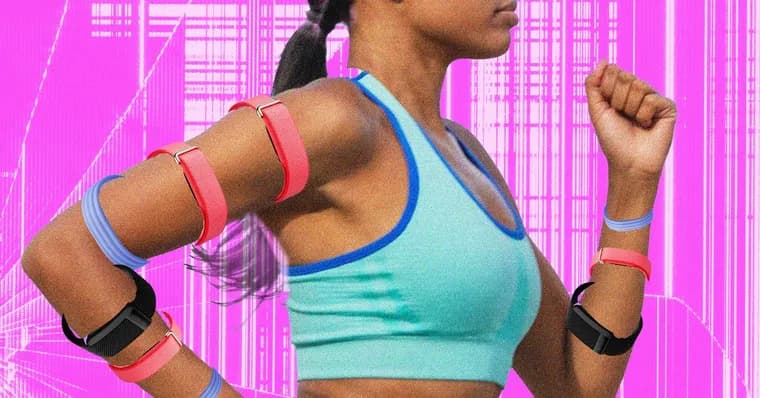
A new wave of health wearables is built to be ignored: no screen, just sensors that log data all day so you can check it later in a phone app, with the device itself demanding attention only when its battery runs low. The current lineup named in the piece includes the Garmin Cirqa, Google Fitbit Air, Polar Loop, Amazfit Helio Strap, and the Whoop series, which pioneered the category. Citing Bloomberg, the article says Apple is considering its own version of the concept.
The author, a wearables reviewer who has covered the category since Fitbit's first mainstream wave in 2009, frames this as a callback to earlier trackers like the clip-on 2011 Fitbit Ultra and the small-screened 2012 Fitbit Zip, neither meant to be checked more than a couple of times a day. That contrasts with recent years spent wearing OLED smartwatches from Garmin, Samsung, Fitbit and Coros that buzz with messages, sleep scores and move alerts dozens or hundreds of times a day, despite never delivering the life-changing app that was promised back when the first Apple Watch launched in 2015.
Screen-free wearables are essentially ordinary fitness trackers, heart rate sensor, battery, accelerometer, Bluetooth radio, with the display removed. Whoop has sold screen-free devices since its first proper release in 2015, but its own positioning has shifted along with the market: in 2015 it called itself a "performance optimization system exclusively designed for elite athletes and teams." Today, for a $199 annual subscription, it says it will "help you improve how you sleep, train, and feel, starting day one." Rest of the market, including Google's Fitbit Air, has now converged on that same low-distraction pitch.
AI plays a role on both sides of the trend. As an upsell: the Fitbit Air's free app shows stats and charts, but generating plain-language explanations of what the numbers mean requires Google Health Premium at $10 a month. Peter Richardson, vice president and cofounder of Counterpoint Research, told the outlet, "The use of AI in monitoring and guiding health and wellness is still at the early stage of development but will likely become significantly more advanced as AI matures." As a cause of burnout: the author points to friends whose recent performance reviews pushed for heavier AI use in their "personal workflow," part of a broader rise in digital demand.
That second half is backed by Elizabeth Marsh, a doctoral researcher at the University of Nottingham who studies the dark side of the digital workplace. Her research finds that digital tools consistently trigger a cluster of harms, technostress, information overload, constant interruption, and blurred work-home boundaries, and that information overload and FOMO correlate strongly with lower well-being and higher strain. One participant in her study on "digital workplace technology intensity" described notifications as something that "make me feel sometimes on edge and it does make me feel anxious and it affects my mental health." Marsh also found that simply turning notifications off was not a fix, since people then worried they would miss something.
Marsh's own recommended alternative is what she calls "digital mindfulness": an awareness of how you engage with technology rather than operating on autopilot, built on three elements. "Intention," having a clear purpose for picking up a device rather than reaching for it reflexively; "attention," staying with the chosen task instead of chasing every competing pull; and "attitude," responding to your own lapses with patience rather than self-criticism. The piece closes by noting that buying a screen-free tracker like the Fitbit Air is not digital mindfulness in itself, but fits that mindset more naturally than a notification-spewing smartwatch does.
Key facts
- Screen-free wearables named in the piece include the Garmin Cirqa, Google Fitbit Air, Polar Loop, Amazfit Helio Strap and the Whoop series; Bloomberg reports Apple is considering its own version.
- Whoop, screen-free since its 2015 debut, has repositioned from an 'elite athletes and teams' pitch to a mass-market $199 annual subscription aimed at anyone wanting to sleep, train and feel better.
- Google's Fitbit Air gives free stats and charts, but AI-generated plain-language explanations of the data require Google Health Premium at $10 a month.
- Elizabeth Marsh (University of Nottingham) finds digital tools trigger technostress, information overload, constant interruption and blurred work-home boundaries, and that simply disabling notifications does not fix the strain because people fear missing something.
- Marsh's alternative, 'digital mindfulness,' rests on three elements: intention, attention and attitude toward how you use a device.
Why it matters
The piece argues screen-free wearables are a deliberate reset for a category that had drifted into smartwatch territory, OLED screens, AI assistants, constant buzzing, without ever delivering the life-changing app promised since the first Apple Watch in 2015. AI sits on both sides of the reset: it is part of why people feel overloaded enough to want a low-distraction device in the first place, and it is the feature makers now sell to justify buying one, since removing the screen pushes AI-generated explanations onto the phone app instead.
Who it affects
Consumers already fatigued by constant notifications are the target market. Garmin, Google/Fitbit, Polar, Amazfit and Whoop are all now competing on the same low-distraction pitch, and Apple is reportedly weighing a screen-free device of its own. Researchers like Elizabeth Marsh, who studies digital-workplace harms, supply the evidence for why the pitch resonates.
How to use it
Pricing named in the piece: Whoop's screen-free tracker runs $199 a year; the Fitbit Air's base app is free, but its AI-generated narrative explanations require Google Health Premium at $10 a month. Separately from any purchase, Marsh offers a free framework, 'digital mindfulness', built on intention (a clear reason for picking up a device), attention (staying with the chosen task) and attitude (patience with your own lapses).
How solid is it
This is a Wired feature by a reviewer who has covered wearables since 2009, combining personal reviewing history with on-record quotes from two named specialists, Peter Richardson of Counterpoint Research and Elizabeth Marsh of the University of Nottingham, plus a Bloomberg citation for the Apple claim. It reads as analysis and opinion rather than a data-driven study; the stored text carries no byline.
Risks and caveats
The Apple screen-free device is unconfirmed beyond a Bloomberg citation, with no product detail given. The 'low-distraction' pitch itself depends on a paid AI subscription for Fitbit Air, so avoiding a screen does not mean avoiding a bill. Marsh's own findings caution that cutting off notifications outright is not a solution by itself, and that owning a screen-free tracker does not automatically amount to digital mindfulness.
“The use of AI in monitoring and guiding health and wellness is still at the early stage of development but will likely become significantly more advanced as AI matures.”
— Peter Richardson, vice president and cofounder of Counterpoint Research