Yau Laboratory Alliance launches in Beijing to push AI into math research
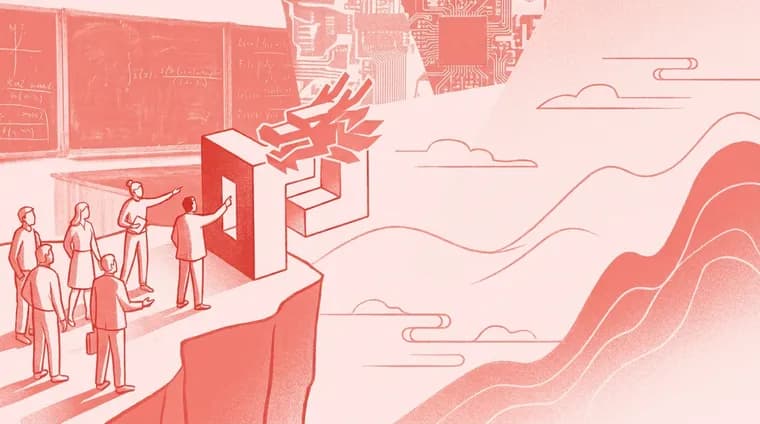
Fields Medal winner Shing-Tung Yau and a group of leading Chinese mathematicians launched an alliance in Beijing on a Sunday to push AI into math research. The South China Morning Post reports, as relayed by The Decoder, that the "Yau Laboratory Alliance for Mathematics and Artificial Intelligence" unites eight institutions and aims to build a network of over 1,000 researchers. Yau warned that China is falling behind the US.
The Decoder sets this against the mood in the West, where skepticism dominates. Twenty-five Fields Medal winners, including Terence Tao and Peter Scholze, worry that AI-generated proofs erode mathematical understanding and make researchers dependent on tools they can't follow. Parts of the community are calling for a boycott of AI-generated proofs, while others say they are shocked by the sheer volume of automated submissions.
China, by contrast, wants to build specialized models, develop machine-verifiable proofs and create transparent AI reasoning.
The article closes with a caveat that cuts across both camps: even among experts who use AI, there is no consensus on whether it produces genuine mathematical insight or just brute-forces its way through known methods, or whether that distinction even matters.
Key facts
- Shing-Tung Yau and leading Chinese mathematicians launched the Yau Laboratory Alliance for Mathematics and Artificial Intelligence in Beijing on a Sunday, per the South China Morning Post.
- The alliance unites eight institutions and aims to build a network of over 1,000 researchers.
- Yau warned that China is falling behind the US.
- Twenty-five Fields Medal winners, including Terence Tao and Peter Scholze, worry that AI-generated proofs erode mathematical understanding and create dependence on tools researchers can't follow.
- China's stated approach: specialized models, machine-verifiable proofs and transparent AI reasoning.
Why it matters
The story is a contrast in how two research communities are responding to AI in mathematics. In the West, the source describes skepticism: twenty-five Fields Medal winners worry that AI-generated proofs erode mathematical understanding, and parts of the community call for a boycott. In China, Yau and colleagues are organizing an institutional push. Yau's own framing is competitive: he warned that China is falling behind the US. There is no new technical result here; the news is the organizational move and the split in attitudes.
Who it affects
Mathematicians in China, who are the intended members of the planned network of over 1,000 researchers across eight institutions. Western mathematicians are affected indirectly: the source says some are shocked by the sheer volume of automated submissions and that parts of the community want AI-generated proofs boycotted. Researchers who already use AI tools are also in the frame, since the source notes there is no consensus among them on whether the tools produce genuine insight.
How to use it
There is nothing to adopt or install here; this is a report on an organizing effort. The practical takeaway is the direction the alliance says it will take: specialized models, machine-verifiable proofs and transparent AI reasoning. Anyone working at the intersection of AI and mathematics can watch for whether the alliance publishes concrete projects or tools along those lines.
How solid is it
This is a secondhand account: The Decoder relays a South China Morning Post report. The alliance's name, the count of eight institutions and the aim of over 1,000 researchers all come from that report. The eight institutions are not named. No timescale is given for reaching the 1,000-researcher target. Yau's warning about China falling behind the US is paraphrased, not a direct quotation. The headline's phrase about Western mathematicians fearing AI makes them dumber is The Decoder's framing; the body says they worry AI proofs erode mathematical understanding and create dependence on tools they cannot follow. The source does not say when or in what document the twenty-five Fields Medal winners expressed their worry.
Risks and caveats
The comparison is drawn by the outlet, not established by data: the piece sets Western skepticism against Chinese enthusiasm without measuring either. Who is calling for the boycott of AI-generated proofs is not specified. China's goals of specialized models, machine-verifiable proofs and transparent reasoning are stated intentions, and no results are reported. The deeper open question remains unresolved even among AI users: whether the tools produce real insight or only brute-force known methods, or whether that distinction matters.
“Even among experts who use AI, there's no consensus on whether it produces genuine mathematical insight or just brute-forces its way through known methods, or if that distinction even matters.”
— The Decoder