Australia proposes AI safety law requiring independent audits of frontier models
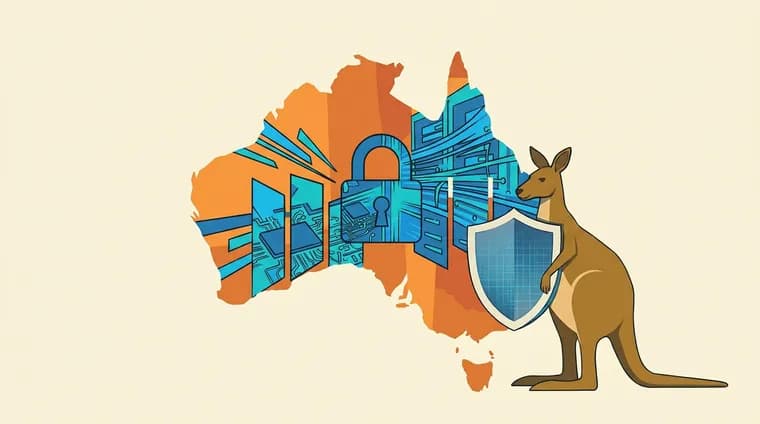
Australia's government, led by Prime Minister Anthony Albanese, has announced a law that would impose mandatory safety rules on frontier AI companies operating in the country for the first time. The rules target the most advanced models with the highest risk profiles and fall under the government's "AI in Australia's Interests" agenda.
Companies building frontier models would have to open them up to independent audits, maintain ongoing safety checks, publish their safety frameworks, and report security incidents to the government immediately. The last requirement is partly aimed at catching early warning signs from AI agents that go off the rails.
A new oversight body would work alongside the existing Australian AI Safety Institute to enforce compliance and hand out steep penalties for violations.
Albanese, Deputy Prime Minister Richard Marles, and ministers Tony Burke and Tim Ayres said the government is putting domestic safety guardrails in place before entering international negotiations. The stated goal is to protect citizens and national interests while building the kind of trust and regulatory stability that attracts investment and lets AI benefit the economy and healthcare. More details will follow once consultations wrap up.
Key facts
- Australia's government, led by Prime Minister Anthony Albanese, announced a law that would bring mandatory safety rules to frontier AI companies operating in the country for the first time.
- Frontier model makers would have to allow independent audits, maintain ongoing safety checks, publish safety frameworks and report security incidents to the government immediately.
- A new oversight body would work with the Australian AI Safety Institute to enforce compliance and impose steep penalties.
- The immediate incident-reporting rule is partly meant to catch early warning signs from AI agents that go off the rails.
- Ministers say domestic guardrails come before international negotiations; more details will follow after consultations.
Why it matters
This would be Australia's first mandatory safety regime for frontier AI. Until now, the source says, no such binding rules applied to these companies in the country. The package pairs independent audits with published safety frameworks and immediate incident reporting, and it names AI agents that misbehave as one concern behind the reporting rule. The government also frames the move as groundwork: it wants domestic guardrails in place before it enters international negotiations.
Who it affects
The rules target companies building the most advanced models with the highest risk profiles, as long as they operate in Australia. The source names no specific company. It does not define "frontier" or give a threshold for which models are covered. The government's stated aim is also to benefit citizens, the economy and healthcare, and to attract investment through trust and regulatory stability.
How to use it
There is nothing to apply yet, because the proposal is still heading into consultations. For developers of frontier models, the announcement signals what would be required: models open to independent audits, ongoing safety checks, a published safety framework, and immediate reporting of security incidents to the government. The source does not say who would conduct the audits or what access auditors would get.
How solid is it
The report is a short news account of a government announcement, based on statements from Albanese, Marles, Burke and Tim Ayres, whom the source paraphrases without direct quotation. It is a proposal, not an enacted law. The source gives no date for the announcement and no timeline for introduction, passage or entry into force. It says more details will follow once consultations wrap up, and it does not say what the consultations involve or how long they last.
Risks and caveats
Key specifics are still open. Penalties are described only as "steep". The name of the new oversight body is not given, nor is its relationship to the AI Safety Institute beyond working alongside it. No reaction from AI companies, opposition or industry is reported, so it is unclear how the final rules might change after consultation.