MIT Technology Review: New York City bans school AI, Google keeps ad tech business
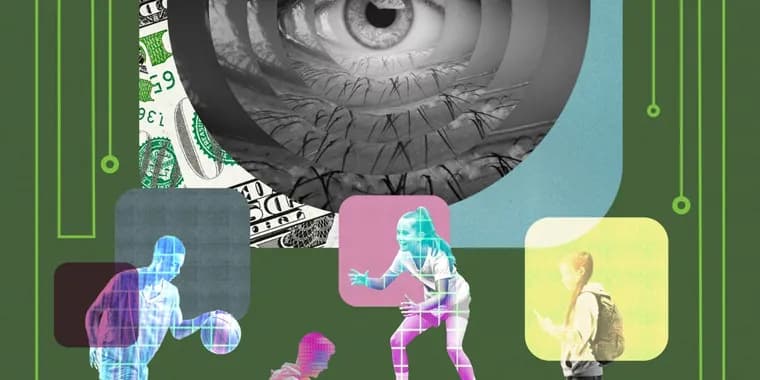
MIT Technology Review's daily newsletter, The Download, opens with two feature pieces. Kelly Clancy writes that digital harms have become the defining fear of American parents, who are increasingly turning to content-monitoring apps that scan their children's texts, photos, emails and chats and issue alerts whenever an algorithm flags something as dangerous. These tools have had genuine successes, the piece says, including preventing suicide attempts, intercepting predators and averting school shootings, but they can also cause harm themselves, from false alarms and unnecessary interventions to damaged trust and anxiety; child-safety researchers argue that better approaches exist, though the newsletter blurb does not describe what those approaches are and points instead to a fuller article in MIT Technology Review's kids-themed print issue.
Casey Crownhart's piece covers agriculture's dependence on fossil fuels. Fertilizer prices have swung wildly this year, driven in part by trade disruptions and high natural-gas prices, because natural gas is both an energy source and a chemical input for ammonia, a key fertilizer ingredient. The war in Iran has pushed natural-gas prices higher and disrupted fertilizer trade through the Strait of Hormuz; the newsletter notes that a closure of the strait could make fertilizer access harder still for some of the world's poorest countries, though it does not say the strait has actually closed, nor does it give dollar figures for the price swings.
The newsletter's must-reads section rounds up ten further stories. New York City has banned AI in elementary and middle schools for one year, a moratorium the newsletter says will affect 600,000 students and that, per the Associated Press, applies to any software using student-facing generative AI. Taiwan has uncovered a hidden Chinese network targeting its chip sector, linking 166 cases to illegal operations and talent poaching, and MIT Technology Review adds that the island's silicon shield could be weakening even as its president argues Taiwan's chip prowess is built on democracy. Uber has launched the UK's first commercial robotaxi service, running on technology from UK startup Wayve with safety drivers on board at first, while in the US the company has allied with driver unions to slow the rollout of robotaxis and, back in the UK, faces a lawsuit over algorithmic pay. A US judge has rejected the government's demand to force a sale of Google's ad tech business, though Google must still change how it treats rivals and shares information; the Wall Street Journal is cited as calling the ruling a big deal for antitrust investigations. Serbians, including student activists, lawmakers and a local councilor, have been targeted with mercenary spyware after the country's elections. The Trump administration has backed OpenAI in its New York Times lawsuit, with the Justice Department arguing that AI training can qualify as fair use and adding that national security depends on US tech dominance; the US is separately urging G20 countries to allow AI training on creators' work. Public housing tenants are suing over sensors that collect minute-by-minute data on noise and motion in their homes. Anthropic appears to have won back the Trump administration's trust, with the commerce secretary saying the company is "back on the right side." Smaller exoskeletons, the newsletter says, are proving more useful in practice than combat supersuits, assisting workers, patients and athletes. And AI-generated food images, dubbed AI food slop, have made their way onto real restaurant menus, offering cheap but frequently unappetizing pictures.
The newsletter's quote of the day comes from Nikhil Lai, a principal analyst at Forrester, who tells the New York Times that Google's win against antitrust enforcers marks the end of an era of the US trying to break up complex tech platforms, since courts remain hesitant to dismantle such systems even after finding anticompetitive conduct. The edition closes with a piece asking whether Colossal Biosciences really cloned red wolves: last year the company said it had cloned four of them, surprising scientists working to save the species and even the people whose canids supplied the DNA, while scientists disagreed over the company's broader de-extinction concept. Colossal kept the clones' location secret, and even their purpose was murky to some scientists; MIT Technology Review frames the central question, whether the company cloned red wolves at all, as still open, and points readers to a fuller story rather than resolving it in the newsletter itself.
Key facts
- New York City's one-year moratorium on AI in elementary and middle schools will affect 600,000 students and covers any software using student-facing generative AI.
- A US judge rejected the government's push to force a sale of Google's ad tech business, though Google must still change how it treats rivals and shares information.
- Taiwan has linked 166 cases to a hidden Chinese network accused of illegal operations and talent poaching that targets its chip sector.
- The Trump administration is backing OpenAI's fair-use argument in its New York Times lawsuit while urging G20 countries to let AI systems train on creators' work, and the commerce secretary separately says Anthropic is "back on the right side."
- Colossal Biosciences' year-old claim to have cloned four red wolves remains disputed among scientists, with the clones' location and exact purpose still unclear.
Why it matters
This single edition of The Download captures how many fronts AI governance is moving on at once. New York City's ban is one of the largest blanket restrictions on classroom AI to date, covering 600,000 students. The Google ruling, per Forrester's Nikhil Lai, likely signals that US courts will not force breakups of complex tech platforms even when they find anticompetitive conduct, which reshapes expectations for other antitrust cases. And the Trump administration's parallel moves, backing OpenAI's fair-use defense, pushing G20 countries toward looser AI-training rules, and warming to Anthropic, show a US government leaning toward accommodating major AI labs rather than restraining them. Alongside these, Taiwan's chip-espionage findings and the fossil-fuel roots of fertilizer prices show how deeply AI-adjacent industries, chips and energy, are entangled with geopolitics and everyday costs.
Who it affects
600,000 New York City elementary and middle school students, plus their teachers and schools. Google, rival ad tech firms and the antitrust regulators watching the precedent. OpenAI, the New York Times and, more broadly, content creators worldwide whose work could be opened to AI training under the G20 push. Anthropic and its standing with the White House. Taiwanese chip companies and workers targeted by talent poaching. Uber drivers, unions and riders in both the US and UK. Serbian student activists, lawmakers and a local councilor targeted by spyware. Public housing tenants living under sensor monitoring. Parents and children who use, or are monitored by, child-safety apps. And farmers and consumers, especially in poorer countries, exposed to fertilizer price swings tied to natural-gas costs.
How to use it
Read this as a single day's cross-section of AI and tech policy rather than one continuous story: schools moving to ban AI outright, a court declining to break up a dominant ad tech platform, and an administration warming to major AI labs are three separate signals worth tracking on their own terms. Each item in the roundup points to a fuller story elsewhere, some from MIT Technology Review itself and others from outlets including Politico, the Associated Press, Rest of World, Reuters, the Verge, the Financial Times, the Guardian, the New York Times, the Wall Street Journal, Quartz, Axios, the Economist and NBC News; readers who want the full detail on any single item need to follow that specific link rather than rely on the newsletter's one-line gloss.
How solid is it
The roundup draws on a wide spread of named outlets, and several items carry hard numbers: 600,000 students, 166 cases linked to the Taiwan chip network, four red wolves. Other items are thinner. The fertilizer piece gives no dollar figures or percentages for the price swings it describes. The child-monitoring piece asserts that better approaches exist without describing them. Taiwan's president and the US commerce secretary are quoted only by title, not by name. And the Colossal Biosciences item is explicitly framed by MIT Technology Review itself as an open question, "Is it for real?", rather than a settled claim, with the newsletter pointing to a separate full story for resolution.
Risks and caveats
Several one-line items compress claims that need care to read correctly. The Strait of Hormuz item says a closure could make fertilizer access harder for poor countries; the source does not say the strait has actually closed. The Trump administration's backing of OpenAI is described only in the two sentences given, with no detail on the legal mechanism, and the source never states outright that the New York Times is suing OpenAI, only that OpenAI has a New York Times lawsuit. The claim that Colossal Biosciences cloned four red wolves is presented by the newsletter's own framing as unresolved, not confirmed. And several actors, Taiwan's president and the US commerce secretary among them, are referenced only by title, so their identities cannot be verified from this text alone.
“I think this will be the end of an era of the US trying to break up platforms this complex. The courts remain hesitant to dismantle these really complex tech systems, even when finding conduct that is anticompetitive.”
— Nikhil Lai, principal analyst at Forrester, to The New York Times