Nolla Health launches AI-written acne prescriptions in Utah
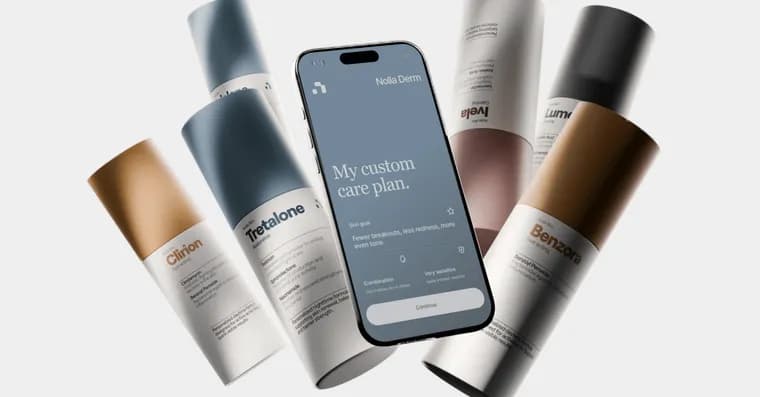
People in Utah can now use AI to get a prescription for acne treatment. On Monday, healthcare startup Nolla Health announced that users in the state can scan their faces using its app. The AI system analyzes acne severity and autonomously writes a prescription. Bloomberg reported the news earlier. Utah has signed off on letting Nolla Health's AI system scan a user's face and issue a prescription directly.
The service is launching as a pilot program with gradually loosening physician oversight. Two physicians will approve each AI-generated prescription before it is issued for the first 100 patients. The source's wording for the next stage is that physicians will start reviewing prescriptions only after they are prescribed, for up to 500 patients. After that, Nolla Health says, "physicians review a sample of at least 10% of prescriptions every month, plus every case involving an escalation or side effect."
Several other healthcare companies are experimenting with AI-generated prescriptions in Utah, which started allowing AI systems to renew certain medications earlier this year. Nolla Health says it is the first in the country to issue initial prescriptions rather than renewals. In its press release the company says the pilot is designed to complement, not replace, physicians, and that by handling routine, low-acuity cases its Nolla Derm service frees dermatologists to focus on complex, high-risk patients.
The program costs $4.99 a month. It applies only to Utah residents who are 18 or older and have mild-to-moderate acne. If the AI system cannot "confidently select a treatment," Nolla Health says it will direct the user to a physician. According to Bloomberg, the AI can currently prescribe eight different skin treatments.
Key facts
- Nolla Health announced that Utah users can scan their faces in its app, and its AI analyzes acne severity and autonomously writes a prescription.
- Oversight loosens in stages: two physicians approve each prescription before issue for the first 100 patients, then review comes after prescribing for up to 500 patients, then a monthly sample of at least 10% plus every escalation or side-effect case.
- Nolla Health says it is the first in the country to issue initial prescriptions rather than renewals; Utah began allowing AI renewals of certain medications earlier this year.
- The program costs $4.99 a month and is limited to Utah residents aged 18 or older with mild-to-moderate acne.
- Users are sent to a physician if the AI cannot confidently select a treatment; per Bloomberg, it can currently prescribe eight skin treatments.
Why it matters
Nolla Health says it is the first in the country to have an AI issue initial prescriptions rather than renewals. Utah began allowing AI systems to renew certain medications earlier this year, and several other healthcare companies are experimenting there. This pilot goes a step further: the AI writes the first prescription on its own, with human review added around it.
Who it affects
The service is open to Utah residents who are 18 or older and have mild-to-moderate acne. Dermatologists are also in the frame: Nolla Health's press release says handling routine, low-acuity cases frees them to focus on complex, high-risk patients.
How to use it
Eligible users scan their faces with the Nolla Health app, and the AI system assesses acne severity and writes a prescription. The program costs $4.99 a month. If the AI cannot confidently select a treatment, the user is directed to a physician.
How solid is it
The announcement comes from Nolla Health and was reported earlier by Bloomberg; the eight-treatment figure is Bloomberg's. The claim to be first in the country is Nolla Health's own. The source does not report any clinical results, accuracy figures or safety data for the AI system.
Risks and caveats
This is a pilot. Physician oversight starts at full pre-approval and loosens: after the first 100 patients, review shifts to after prescribing for up to 500 patients, then to a monthly sample of at least 10% plus every escalation or side-effect case. The source's wording for the 100-to-500 phase is ambiguous and it does not explain it further. The scope is narrow: Utah only, adults only, mild-to-moderate acne. The source does not say when the pilot ends or whether it will expand beyond Utah.
“The pilot is designed to complement, not replace, physicians”
— Nolla Health, press release