Yale's Sonnenfeld calls Nvidia a detriment to US industrial might
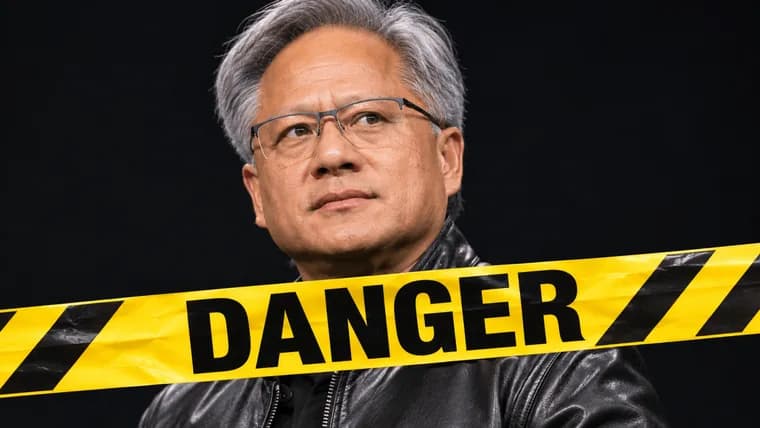
Investors cheered Jensen Huang's reinstatement as Nvidia's CEO on Monday, but Yale business academic Jeffrey Sonnenfeld says they are celebrating a mistake. In a TechCrunch Q&A, edited for length and clarity, he argues that Nvidia is largely responsible for putting sophisticated technology in the hands of US adversaries and is "a detriment to U.S. global industrial might" rather than a champion of it.
The return followed heavy pressure from Washington. Nvidia's chairman had effectively ruled it out only the week before. Then, in a torrent of private weekend calls led by Vice President JD Vance, top administration officials leaned on the board, and President Trump called the board directly to vouch for Huang. "I made the deal," Trump told CNBC on Monday. Directors also put Huang back on the board, while the board is still investigating whether foreign intelligence efforts targeted him.
Sonnenfeld says the board failed to rely on experts and failed in its diligence: it hired the Wachtell law firm, then reversed itself when the firm had barely started investigating. He predicts the directors will be sued and lose, face a "historic level of individual liability", and have very inadequate directors and officers insurance. He accuses the board of incompetence, collaboration and cowardice, arguing that Trump had little to hold over it. Government business might explain such involvement at SpaceX, where he puts it at 46%, but for Nvidia the US government is not even 1% of business. Trump can call off federal investigations, he says, but not shareholder litigation. He cites estimates of probably 30 suits. He also says 14 Republican senators have come out against the move, naming Pete Ricketts, Josh Hawley, Tom Cotton and John Cornyn among prominent conservatives, and suggests such issues may help explain why Nvidia's stock was tumbling that day. Asked whether classified findings clearing Huang might have reassured directors, he said they have not seen them, nor the results of congressional inquiries, and that seeing them still would not matter.
Five suits have been filed in Northern California. They include a potential class action seeking to make Nvidia and Huang compensate investors, and a shareholder derivative suit against the directors alleging they ignored red flags about Huang's relationship with suspected Chinese spy Alice Huang. Three more followed on November 18. Huang and Nvidia also face a Justice Department antitrust investigation, a reported SEC accounting probe, a possible FBI review, a California subpoena, an export-control case that put partner Megaspeed on the US trade blacklist on Monday, and congressional inquiries, including a Senate Banking hearing next week where Huang has agreed to testify.
On China, Sonnenfeld says Nvidia chips have reached the military, including through Northwestern Polytechnical University, a military institution, and that this is going into weapons that will be funneled to Iran and Russia. TechCrunch's editor's note says China has long denied arming either country, though Nvidia chips have been found in Russian drones. The note also says the US ambassador to China reported in September that Trump had discussed selling arms to China, which Trump denied. Sonnenfeld further alleges that Chinese open source models such as Kimi and DeepSeek are "distilled" from Anthropic using high-end Nvidia chips, and points to Israeli company Lava, which he says showed three weeks ago that dozens of Blackwell chips are in China. He links a plunge in Anthropic's shares to Huang's return. Nvidia has denied reports of smuggling its most advanced chips into China and has called smuggling a "non-factor".
Sonnenfeld also rejects the idea that Nvidia needed Huang. He credits chip design to co-founder Chris Malachowsky and a next-generation team including Jonah Alben, and the CUDA software to Ian Buck. On the extramarital affairs Huang has admitted, which some frame as HR policy gone wild, he says a CEO who ignores his own code of conduct makes it unenforceable, and that an affair with a subordinate, even if consensual, skews resource, staffing and product decisions through favoritism or retribution.
Key facts
- Jensen Huang was reinstated as Nvidia CEO on Monday after officials led by Vice President JD Vance pressed the board over the weekend and President Trump called to vouch for him.
- Jeffrey Sonnenfeld of Yale predicts directors will be sued and lose, facing a "historic level of individual liability" with very inadequate D&O insurance.
- Five lawsuits, including a class action and a derivative suit against directors, have been filed in Northern California; Sonnenfeld cites estimates of probably 30.
- Sonnenfeld says advanced Nvidia chips have reached China, including a military university; Nvidia has denied reports that its most advanced chips were smuggled there.
- Huang has agreed to testify at a Senate Banking hearing next week, one of several inquiries that also include a Justice Department antitrust investigation.
Why it matters
A prominent business academic is arguing against the market's reaction. Investors cheered Huang's return, while Sonnenfeld frames it as a governance failure and a national security problem. His case rests on two lines: that directors gave in to political pressure without doing their own diligence, and that Nvidia's chips are reaching China despite US export controls. He also argues that Trump had nothing to threaten the board with, since he says the US government is not even 1% of Nvidia's business.
Who it affects
Nvidia's directors are the most exposed in Sonnenfeld's account, because the derivative suit targets their own conduct and any recovery would go to the company. Investors are the focus of the class action, which seeks compensation for losses from Nvidia and Huang. Huang faces the investigations and a Senate hearing. Sonnenfeld also says Anthropic is plummeting, that the return is hurting OpenAI, Grok, Perplexity and Gemini, and that employees on a team led by someone in an affair with a subordinate see their fortunes tied to something they cannot control.
How to use it
Treat this as a map of open questions to track. The nearest marker is the Senate Banking hearing next week, where Huang has agreed to testify. Beyond that, watch the shareholder suits in Northern California, which Sonnenfeld says the president cannot call off, the Justice Department antitrust investigation, the reported SEC probe into accounting, the possible FBI review, the California subpoena and the Megaspeed export-control case. The board's own inquiry into possible foreign intelligence targeting of Huang is another.
How solid is it
This is opinion: one critic's views in a Q&A that TechCrunch edited for length and clarity, with a short reported introduction. The lawsuits are allegations, and no court ruling is reported. The piece presents no evidence for the claim that Chinese models are distilled from Anthropic. It includes no response from the board, Huang or Anthropic to Sonnenfeld's criticisms, apart from Nvidia's denial of the smuggling reports. No share price figures are given: the introduction says investors cheered the return, while Sonnenfeld says Nvidia's stock was tumbling that day. The count of 30 suits is an estimate he cites, against five filed suits described by TechCrunch.
Risks and caveats
Several of the sharpest statements are contested or forecasts. That the board will lose in court is Sonnenfeld's prediction. His link between Nvidia chips, a military university and weapons for Iran and Russia comes with an editor's note that China has long denied supplying weapons to either country, although Nvidia chips have been found in Russian drones. The SEC probe is only reported and the FBI review only possible. Alice Huang is described as a suspected spy, and the claim that the board ignored red flags is an allegation in the derivative suit.
“The board showed, in addition to incompetence and collaboration, just cowardice in their capitulation because Trump has nothing to wave over them.”
— Jeffrey Sonnenfeld of Yale, in a TechCrunch Q&A