YouTuber says police visited him after he built a Flock-style camera to track cops
Anthony Sistilli, a Canadian software engineer and YouTuber from Brampton, Ontario, built his own automatic license plate recognition (ALPR) camera and set it up to track the movement of police cars. He did it about a month before the article was published. Brampton is a city that recently spent 2 million Canadian dollars on "high-resolution cameras, along with automated licence plate recognition technology."
Sistilli posted several TikTok videos explaining how he built the camera and how it works. He described it as "a personal Flock surveillance camera to Flock the Flockers", and the caption on one post added "(only tracks police cars)". Flock is the company best known for ALPR cameras and sits at the forefront of both their wide adoption and the controversies that followed.
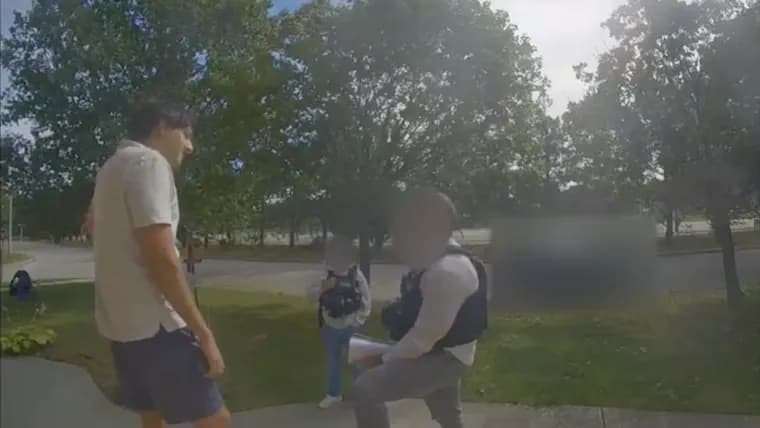
According to a video Sistilli posted on YouTube earlier in the week, two officers from Peel Regional Police then allegedly turned up at his front door to ask what his "intentions" were for the data he gathered. Sistilli points to the irony. In his telling, one of the officers specifically mentioned how scary it would be for them, because people could find out where officers lived, when they went on shift and what they did during the day, and that this kind of information could put them personally at risk from any bad apples who wanted to track them down.
The long-form YouTube video uses the visit as a starting point for a wider discussion of ALPR cameras. It covers how companies like Flock market their products to municipalities, which Gizmodo calls aggressive and, arguably, deceptive; whether the cameras actually reduce crime; the lack of transparency about how data is collected and kept; and other issues around the technology. Gizmodo's framing is that police are happy to use ALPR cameras on ordinary citizens but far less enthusiastic about citizens pointing the same technology at them, and it notes the steady stream of reports of misuse, from stalking ex-partners to harassing immigrants to ruining the lives of random people.
Peel Regional Police did not immediately respond to Gizmodo's request for comment.
Key facts
- Anthony Sistilli, a software engineer and YouTuber from Brampton, Ontario, built his own ALPR camera to track police cars and posted several TikTok videos about it.
- He says two Peel Regional Police officers allegedly came to his front door to ask what his "intentions" were for the data he gathered.
- By his account, one officer said that being trackable could put police personally at risk, since people could learn where they live and when they are on shift.
- His long-form YouTube video uses the visit to examine how Flock-style cameras are marketed to municipalities, whether they cut crime, and how little is disclosed about data collection and retention.
- Peel Regional Police had not responded to Gizmodo's request for comment.
Why it matters
The story puts a sharp point on a double standard. ALPR cameras, with Flock the best-known name, have spread quickly and drawn repeated reports of misuse. Here the same technology is pointed at police, and by Sistilli's account the officers raised the very risks that critics of ALPR data raise about everyone else: that location and routine data can be exploited by people who want to track someone down. Gizmodo uses the episode to underline the lack of transparency around how such data is collected and retained.
Who it affects
Anyone whose plate is read by municipal or private ALPR systems, which is the group the misuse stories concern. It also touches the municipalities buying such systems, such as Brampton with its 2 million Canadian dollar purchase of cameras and plate recognition technology, and hobbyists or journalists tempted to build similar tools. Police officers are part of the picture too, since their own concern about being tracked is at the center of the account.
How to use it
This is not a product or a how-to. The TikTok videos reportedly explain how Sistilli built the camera and how it works, but no technical specifications or cost are given in the article. The practical takeaway is the long-form YouTube video, which Gizmodo says is well worth watching for its look at how ALPR vendors pitch municipalities, whether the cameras reduce crime, and what is disclosed about data retention.
How solid is it
Moderately solid on the basics, thin on the central event. The camera and the TikTok posts are described directly by Gizmodo. The police visit, though, rests on Sistilli's own YouTube video and is reported as "allegedly"; no independent confirmation is given. Peel Regional Police had not commented. Statements about Flock's marketing being aggressive and arguably deceptive, and about frequent misuse of ALPR data, are the article's own characterisation rather than findings presented with evidence in the piece.
Risks and caveats
The article mentions no charges, legal action, warning or order to remove the camera, only the visit itself. It does not say whether Sistilli's camera used Flock hardware or software, or where it is installed, so "Flock-style" describes the concept, not the equipment. The officers' words come second-hand through Sistilli, and the police side of the conversation is not on record. The piece is also openly opinionated, so the broader claims about the industry should be read as the author's view.
“One of [the officers] took the time to specifically mention how scary it would be for them, because people would be able to find out where they lived, when they got on their shift and what they were doing throughout the day, and that that type of powerful information could put them personally at risk [from] any bad apples that might want to track them down.”
— Anthony Sistilli, in his YouTube video, as quoted by Gizmodo