Email relay vendor MailRoute reports that since November 5, 2026 Outlook.com, Hotmail, Live and MSN have bounced some mail from domains with no DMARC record. Microsoft has said nothing; the proposed fix is a single DNS record. →
Per Bloomberg, Goldman Sachs updated its internal guidance in October so that Claude Code and GitHub are limited to engineers, cutting off most traders and bankers. The bank is also a lead underwriter on Anthropic's IPO. →
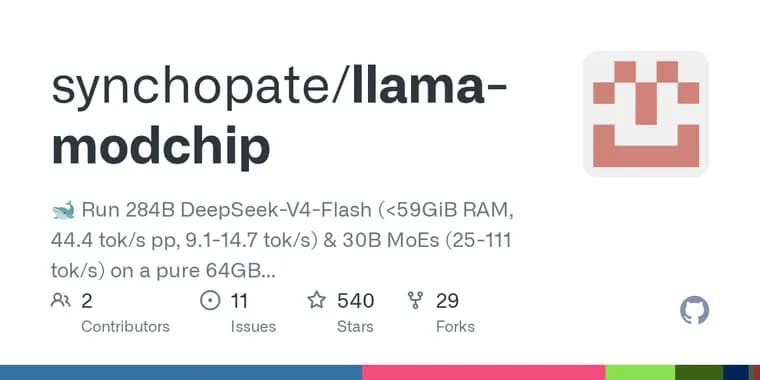
An open-source set of llama.cpp patches shrinks DeepSeek-V4-Flash (284B parameters) to a 56.56 GiB checkpoint that the author says runs on a 64 GB CPU-only machine at 9.1-14.7 tokens per second. All figures are the repository's own. →
A security researcher and Sam Curry chained a leaky admin tool, an exposed ForgeRock identity system and a WAF bypass to take over any customer account and remotely unlock, lock, horn or start cars from an automaker they decline to name. →
The Verge·🔥68Glonce rating68Impact60Novelty55Relevance70Surprise85Players95Credibility85
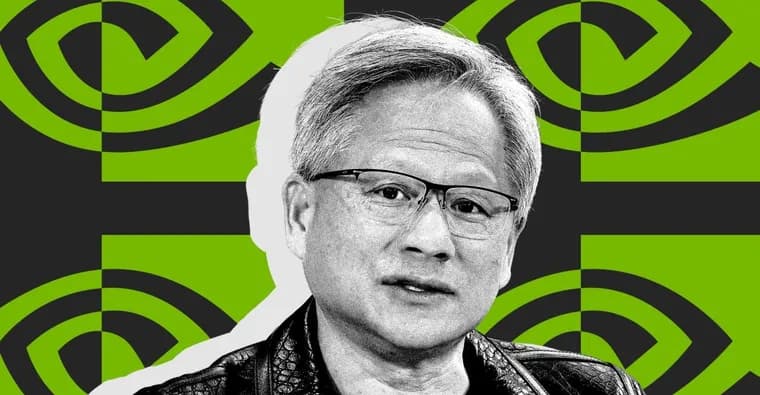
Nvidia's board has started an independent investigation after reports that CEO Jensen Huang had a close relationship with Megaspeed executive Alice Huang, who was reportedly recruited by China's Ministry of State Security. The board says it has no reason to believe secrets were compromised. →
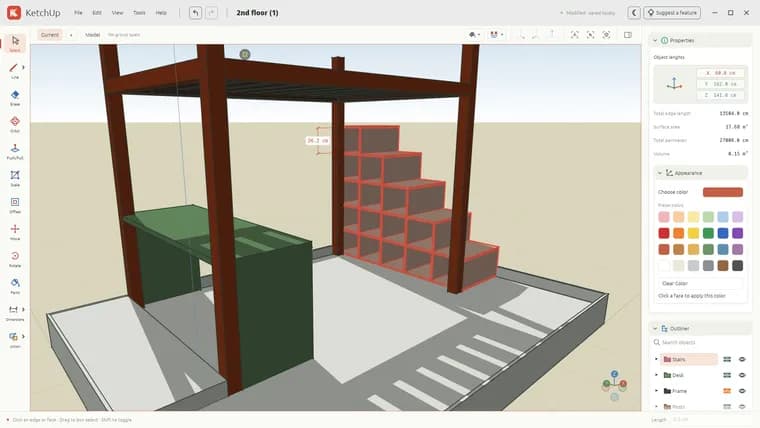
KetchUp is a free, MIT-licensed 3D modeling app for woodworking and furniture design. It runs in a desktop browser or as a native Windows, macOS or Linux app, needs no account, and can import SketchUp geometry. →
The Decoder·🔥64Glonce rating64Impact50Novelty55Relevance100Surprise45Players55Credibility75
Researchers from Alibaba and several Asian universities built Co-Design Bench from real change requests. According to the paper, the best of ten models fully completes just 26.4 percent of tasks. →
The duxlabs.dev site presents Dux Modular Shell, a desktop shell that generates matching colors for supported apps, plus a file manager, system monitor, login greeter, search tool and calendar. It costs nothing to use and asks for tips. →
A blog post describes a personal fix for the exhaustion of juggling many Claude Code and Codex terminal sessions: markdown tickets in git, an agent that works the board, and a single page showing only what needs the author's decision. →
The Verge·🔥61Glonce rating61Impact50Novelty45Relevance100Surprise35Players85Credibility50
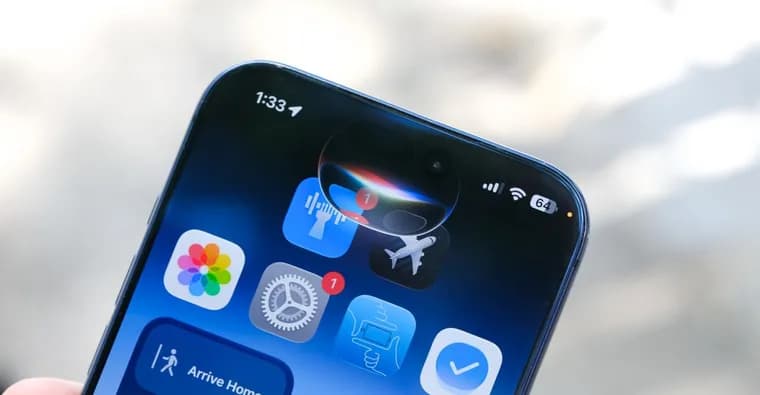
Bloomberg's Mark Gurman, as relayed by The Verge, says Apple is pressing to speed up Siri's roadmap. First-party app control is expected with iOS 27.3, third-party app integration likely in the Spring. →
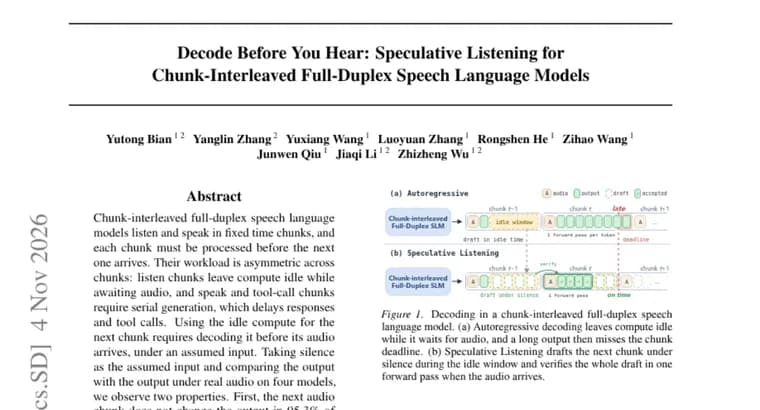
A preprint proposes drafting a speech model's next reply during idle listening time and checking it when real audio arrives. On the authors' own TickTock-Bench, speak chunks run 2.6-2.8x faster and tool-call chunks up to 23.4x. →
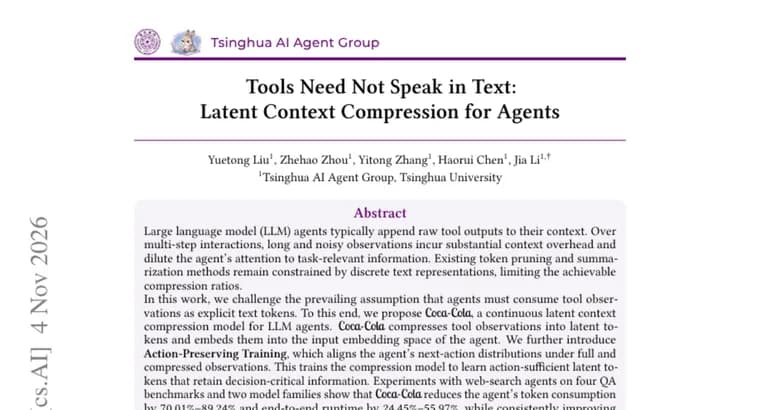
A preprint proposes Coca-Cola, a model that squeezes tool observations into latent tokens instead of raw text. On web-search agents it reports 70.01%-89.24% fewer tokens and faster runs. →
A Ramp report says token spend nearly flatlined over late summer even as volumes rose, which TechCrunch ties to price cuts, discounts and thriftier customers as Anthropic gears up for an IPO. →
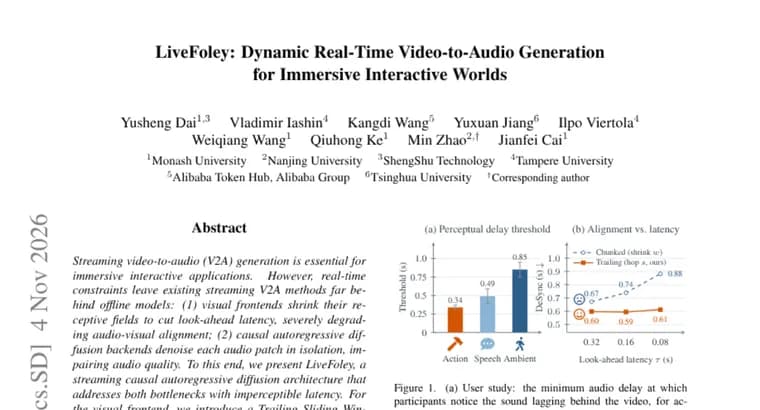
A new paper presents LiveFoley, a streaming video-to-audio diffusion system. The authors say it matches offline models on temporal alignment and leads other streaming systems on audio quality. →
A personal blog post says the AI bubble is not a safe assumption: data-centre spending is one-off, Anthropic's S-1 shows rapid revenue growth, and big AI companies' P/E ratios look healthy. →
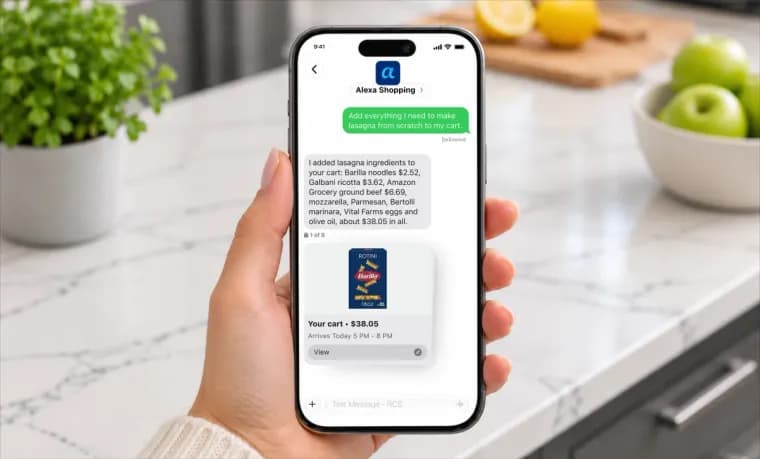
Amazon is launching a feature that lets select US customers shop by texting its Alexa AI agent, just ahead of the holiday season. TechCrunch notes the move comes after Amazon blocked Meta's Muse from querying its site in September. →
The Verge·🔥56Glonce rating56Impact50Novelty30Relevance95Surprise25Players55Credibility85
A group of Elvis Presley's rights holders and the publisher of some of Eminem's biggest records are suing AI music company Suno, claiming it illegally generates music and lyrics that mimic the artists. Suno says it prohibits unauthorized use of artists' work. →
Paul Ford launched tinylittleoffice.com, an office suite that stores data in the URL, and says a couple hundred thousand people visited. His argument: the browser is a powerful app platform and getting cheaper to use. →
France's national blood service (EFS) says hackers accessed control systems at three cold stores holding blood products and raised temperature and defrosting thresholds. Alarms let technicians step in before the products were compromised, it says. →
PacketHound is a free, open-source (GPLv3) tool for Windows 10 and 11 that blocks outgoing connections by default and asks you to Allow or Block each new app, saving the answer as a normal Windows Firewall rule. →
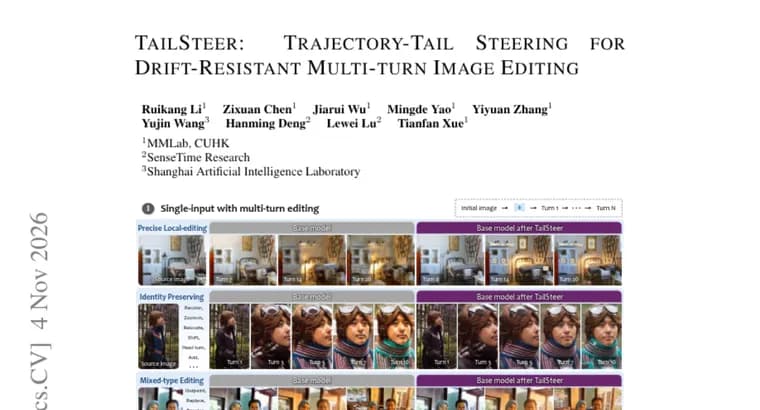
A new paper introduces TailSteer, a final-stage training step that keeps image-editing models from accumulating visual drift over repeated edits. The authors report tests on the FLUX, SenseNova and Qwen families. →
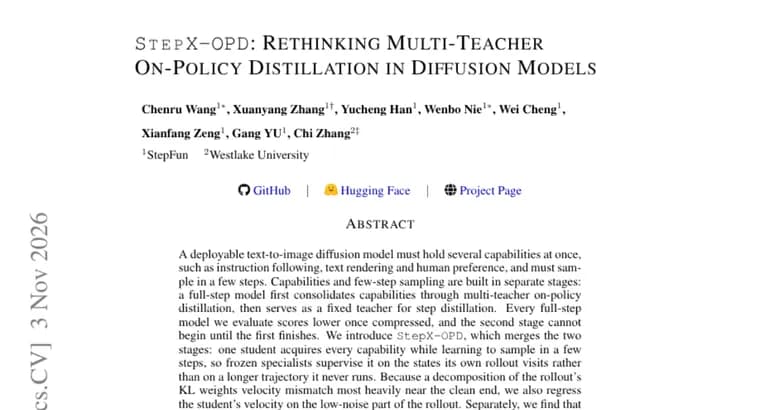
A new paper proposes StepX-OPD, which trains one few-step text-to-image student on multiple specialist teachers in a single stage. On SD3.5-Medium it reports about 37% fewer GPU-hours than the two-stage pipeline. →
A new preprint defines Out-of-Sight Causal Evolution and offers EvoWorld, a baseline where a vision-language model steers a video renderer, plus a dataset and benchmark. →
A blog post says Deno's flagship permissions only pretend to sandbox code: --allow-run can be bypassed through the child's environment, and runtime prompts share a terminal that untrusted code controls. The author's advice is to use bwrap. →
Three watchdog groups asked a federal judge to shut down Project Meridian, the Pentagon's future-of-warfare study with Elon Musk, Palmer Luckey and Newt Gingrich in the lead. They say it is an illegal advisory committee. No court has ruled. →
Wired explains world models, AI systems that take visual input and generate simulated environments, and says they are poised to reach home robots, driverless cars and video games, backed by big funding and a new kind of gig work. →
The Decoder·🔥50Glonce rating50Impact35Novelty25Relevance90Surprise40Players50Credibility60
Turing Award winner Richard Sutton, author of "The Bitter Lesson," argues in a recent post that compute alone will not deliver intelligence. Researchers on X split, and Sam Altman and Dario Amodei still back scaling. →
The Decoder·🔥48Glonce rating48Impact40Novelty35Relevance70Surprise30Players60Credibility80
Three consciousness researchers argue in Nature that current AI is not conscious and probably can't be on silicon, rejecting computational functionalism and the precautionary case for AI welfare. →
A hardware blogger tries to run ST's Linux-class STM32MP2 as a plain, very fast microcontroller with no vendor SDKs or external DDR, aiming to reach an FPGA over PCIe. The post also mentions an accidentally found silicon bug that ST has since published an advisory for. →
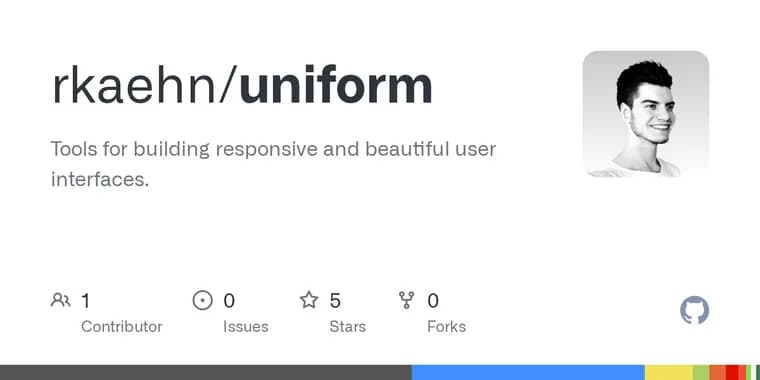
Uniform, a preview UI library with a C core compiled to WASM, does its own text, layout and GPU rendering. Its README says a complete web app comes in under 280 KB compressed. →
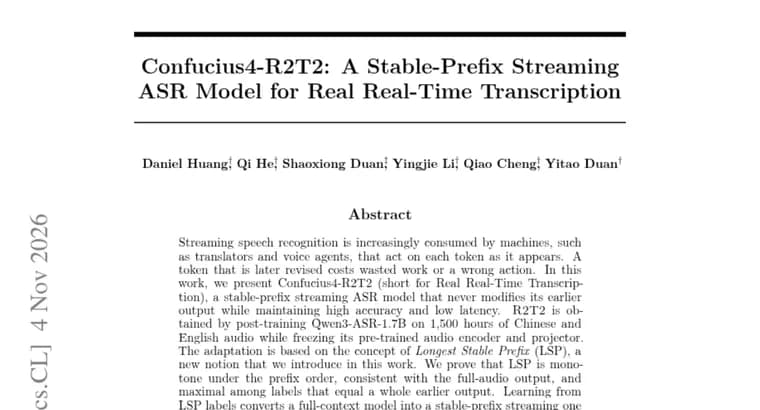
Confucius4-R2T2, a post-trained Qwen3-ASR-1.7B, is a streaming speech recognizer that never revises text it has already emitted. Weights and code are open-sourced. →
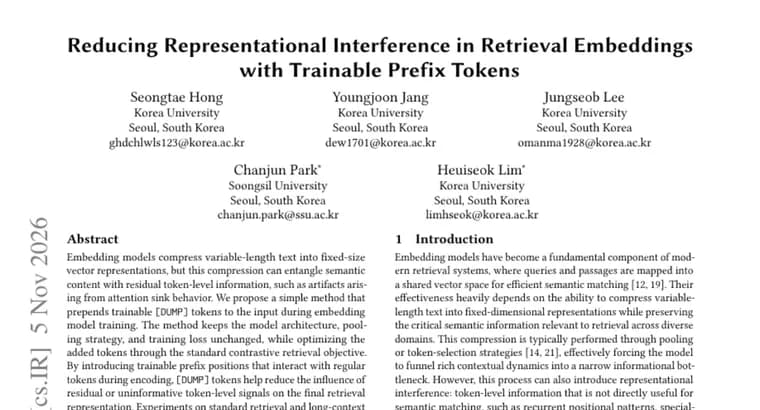
A preprint proposes prepending trainable [DUMP] tokens when training embedding models, with no change to architecture, pooling or loss. The authors report consistent gains over finetuned baselines. →
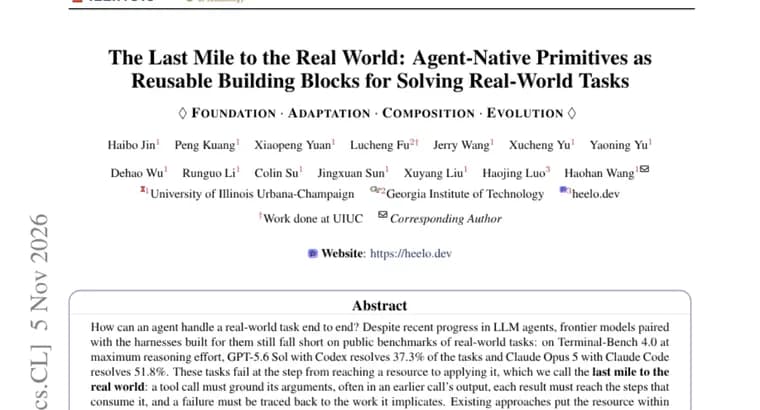
A new paper proposes agent-native primitives and HEELO, a framework that assembles a task-specific harness from them. The authors report gains on Terminal-Bench, ToolBench and GAIA, and on 46 tasks of their own platform. →
A new paper introduces TB-MathModel, a terminal-based benchmark where agents solve full CUMCM and MCM modeling problems and are scored against Outstanding-award papers, with a Lean 4 feasibility check. The top entries reach 64.58%. →
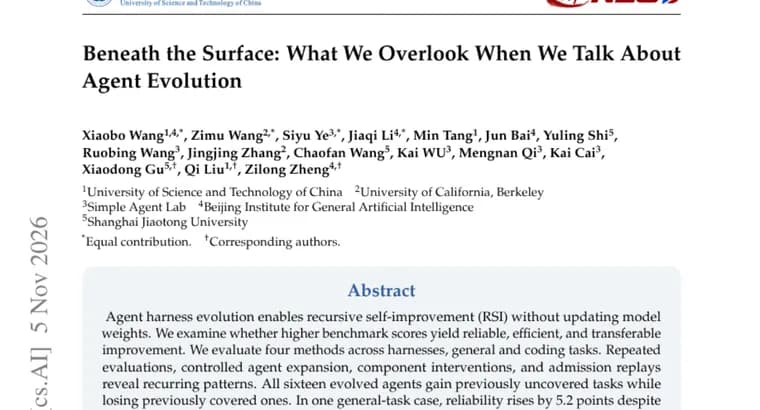
A paper on agent harness evolution tests four methods and finds that higher benchmark scores do not reliably mean better, cheaper or more transferable agents. It proposes EvoAudit as a fix. →
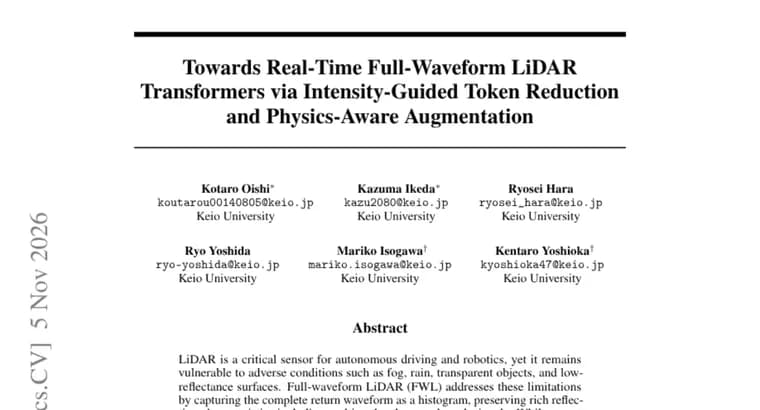
A new preprint proposes FWL-ToPM, a token pruning and merging method, and FWLAug, a waveform-preserving augmentation. On the Ghost-FWL benchmark the authors report an over 8 times speedup and a nearly 9-point F1 gain. →
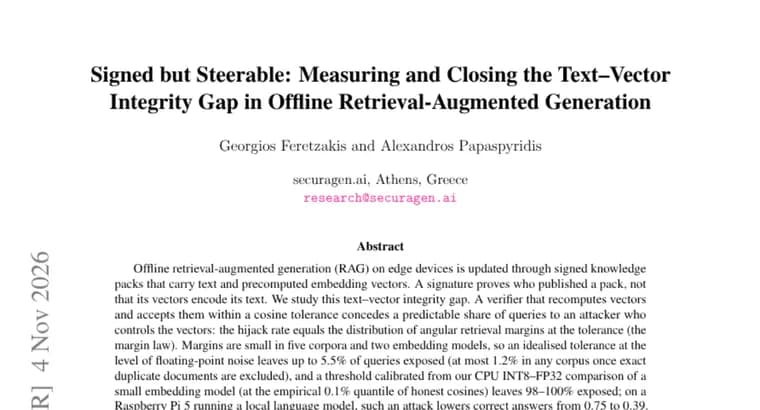
A new paper says signatures on offline RAG knowledge packs prove who published them, not that the embedding vectors match the text. Tolerance-based checks leave queries exposed; the authors propose verifying quantisation codes instead. →
The project page for TACO, the Tensor Algebra Compiler from Stanford and MIT CSAIL, describes a tool that compiles sparse and dense tensor expressions into optimized kernels, with C++ and Python APIs and a browser-based generator. →
Ars Technica·🔥43Glonce rating43Impact30Novelty35Relevance55Surprise45Players50Credibility80
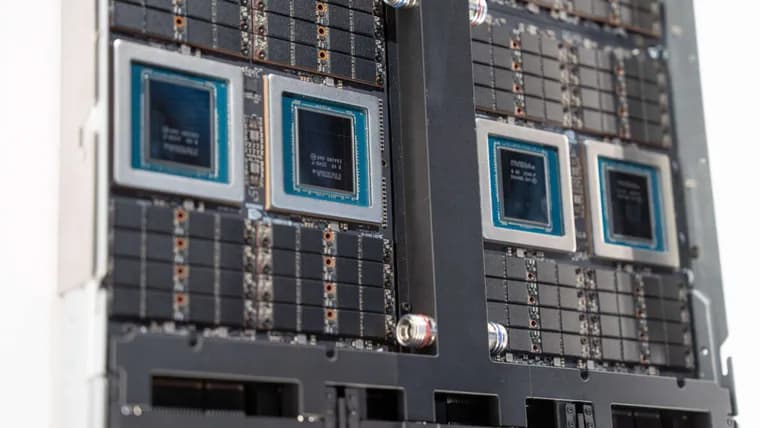
Six pallets of Nvidia equipment valued at $11.4 million disappeared on a truck from Oakland to Fort Worth, and more than two months on, police have announced no arrests or recovery. →
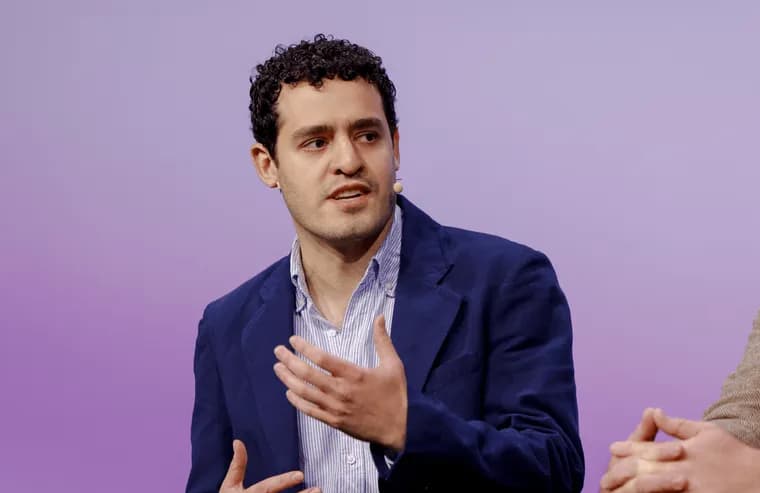
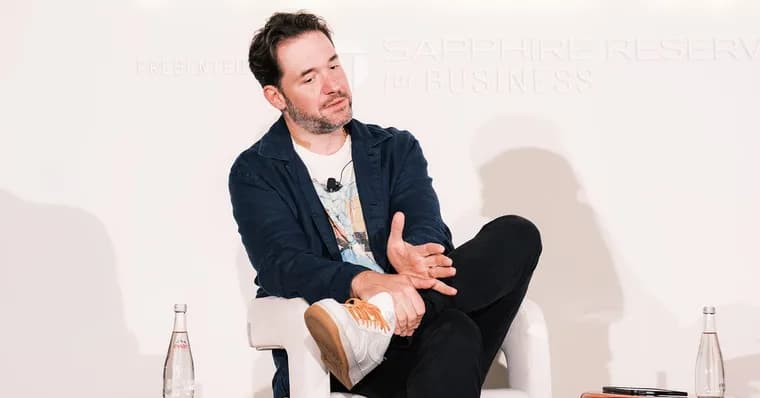
Speaking at the inaugural WIRED World Fair, Reddit cofounder Alexis Ohanian said he expects a better version of the group chat to become the next form of user-generated content, as bots and AI agents reshape the internet. →
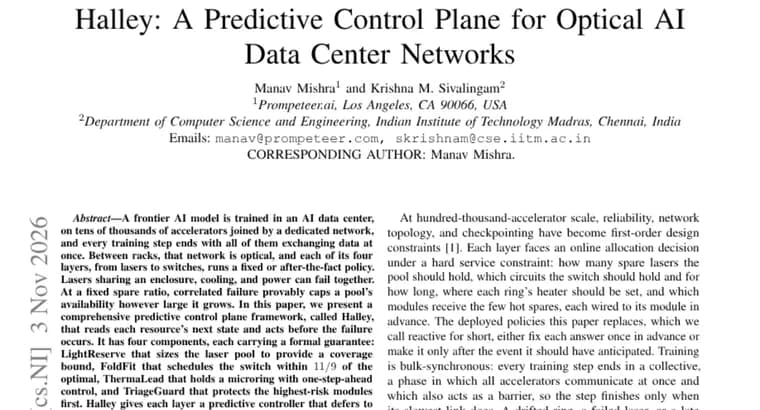
A new paper presents Halley, a control framework that predicts failures in the optical network linking AI accelerators and acts before they happen. The reported gains come from simulations. →
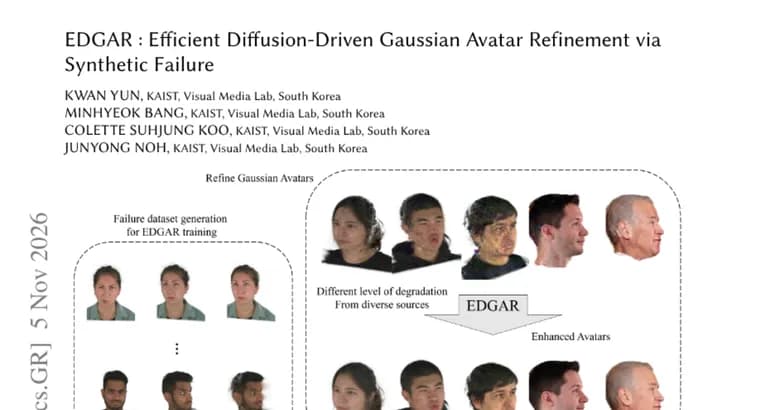
A new paper presents EDGAR, a conditional diffusion framework that corrects blurring, stretching and temporal instability in Gaussian-splatting head avatars while keeping the person's identity. Code is released. →