A study of 159,041 Lovable-built projects, done with Handelsblatt, found apps with personal data readable without login, including passport details and more than 200,000 chat messages at one forum. →
Project Zero is replacing its “90 + 30” policy with “Full X”: bugs go public X days after the vendor is told, starting at 90 days, then 60 from February 2027 and 30 from January 2028. The team blames LLM-speed discovery and exploitation. →
Ars Technica·🔥75Glonce rating75Impact75Novelty75Relevance70Surprise75Players85Credibility90
On a Saturday evening at Starbase, Texas, SpaceX's Starship upper stage returned from orbit and was caught by the launch tower's two arms. Ars Technica calls it a breathtaking feat and a hugely significant step toward a rapidly reusable rocket. →
A petition urging Nvidia to bring back ousted CEO Jensen Huang appears to have passed 115,000 signatures, with Elon Musk among the backers. Huang resigned on Thursday after confessing to an affair with a chip executive suspected by U.S. intelligence of being a Chinese spy. →
The Decoder·🔥71Glonce rating71Impact60Novelty70Relevance100Surprise45Players65Credibility80
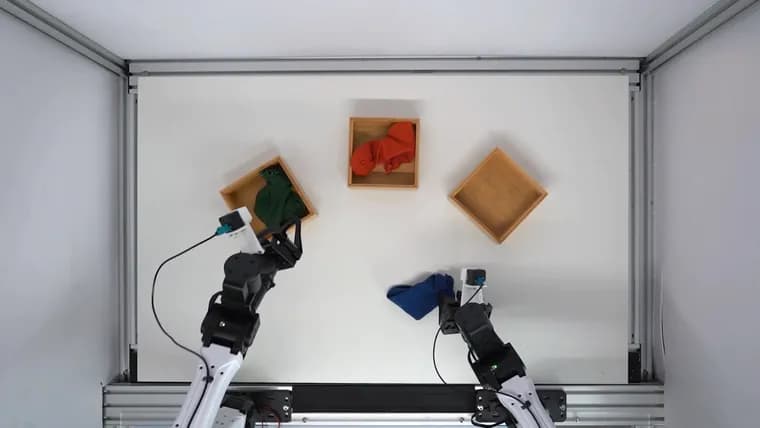
Runway has released the weights and code of Praxis-1, a robot model trained on video, under Apache 2.0. It tops World Action Models on Nvidia's RoboLab-120 at 46.2 percent, but the tests are Runway's own. →
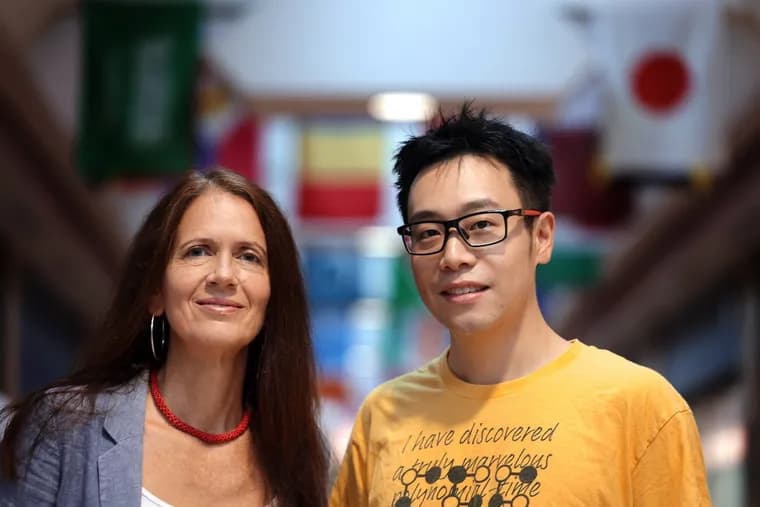
University of Michigan researchers measured Qwen 3, Gemma 3 and Llama 3.1 and found that generating non-English text took 1.4 to 180 times more energy than English, often with lower accuracy. →
The EFF argues that recording and transcribing wearables from Apple, Meta, Google and Amazon leave bystanders with no way to opt out, and that technical privacy promises cover only the device's owner. →
TechCrunch asks what Nvidia's security team knew about the Megaspeed probe and CEO Jensen Huang's relationships, after CSO David Reber left in August. Nothing public links the two, and Nvidia has not answered. →
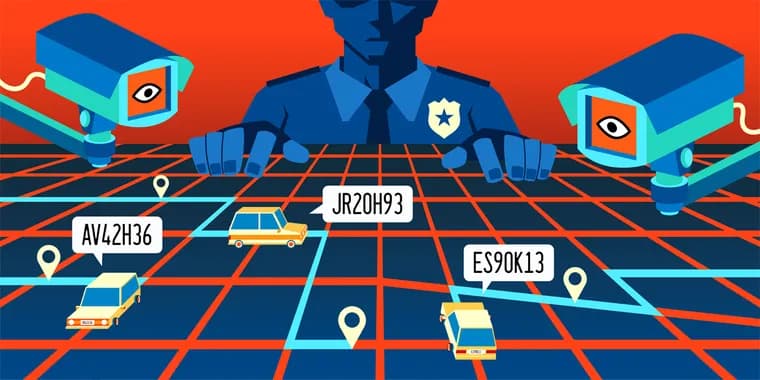
In United States v. Sturdivant, EFF and the ACLU filed an amicus brief arguing that warrantless tracking of a driver through license plate reader data is a Fourth Amendment search. →
The Decoder·🔥63Glonce rating63Impact55Novelty50Relevance95Surprise40Players80Credibility50
Google's Gemini 4 Carbon has taken first place on the MathArena math benchmark from GPT-6.1 Sol, with Claude Fable 5.2 second. With the reasoning settings used in testing, it costs roughly 15 times as much as GPT-6.1 Sol. →
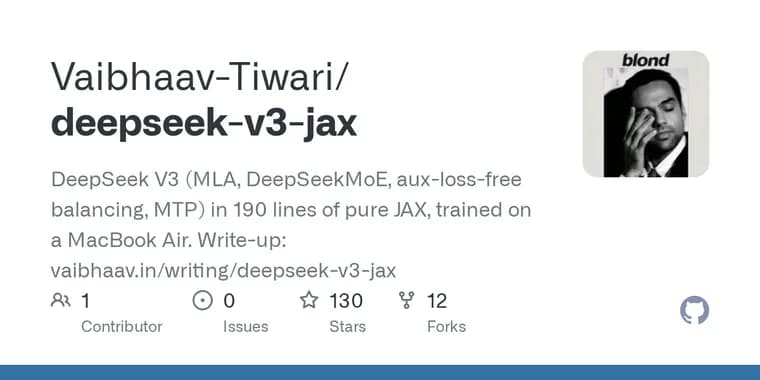
A Show HN repository implements the DeepSeek-V3 architecture in 190 lines of JAX and pretrains a 36.2M-parameter model on a MacBook Air using public-domain detective fiction. Its README calls it an architecture demo, not a strong language model. →
After Jensen Huang's departure from Nvidia, South Korea says GPU supply plans stand, Taiwan says the Taipei headquarters is on track, Japan will monitor the company, and Singapore's Megaspeed probe continues. →
PyPI says its redesigned project pages are now live. A new Security tab shows each release's provenance state and per-file attestations, and warnings flag suspicious changes in how files were published. →
Microsoft Research·🔥60Glonce rating60Impact45Novelty50Relevance95Surprise35Players65Credibility75
Microsoft Research's Focus podcast, edition #98, rounds up a resolved 31-year-old geometry problem, a way to cut context-compaction costs for coding agents, and a tokenizer tested across 104 languages. →
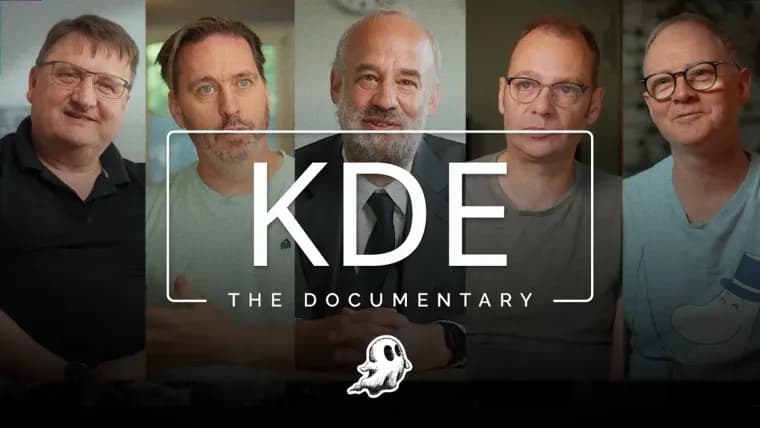
A video titled "KDE: The documentary" is circulating on the PeerTube instance tube.kockatoo.org. The page gives no description of what the film covers. →
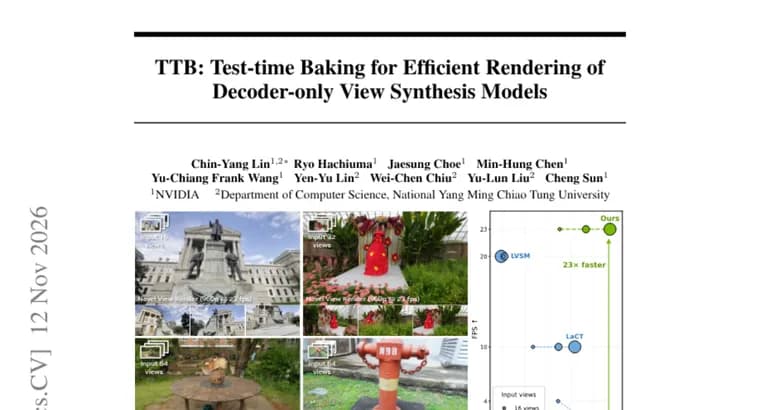
A new preprint proposes Test-Time Baking (TTB), which bakes cross-view attention into a lightweight MLP so decoder-only view synthesis models render faster. The authors report up to 23x speedup with quality on par with the state of the art. →
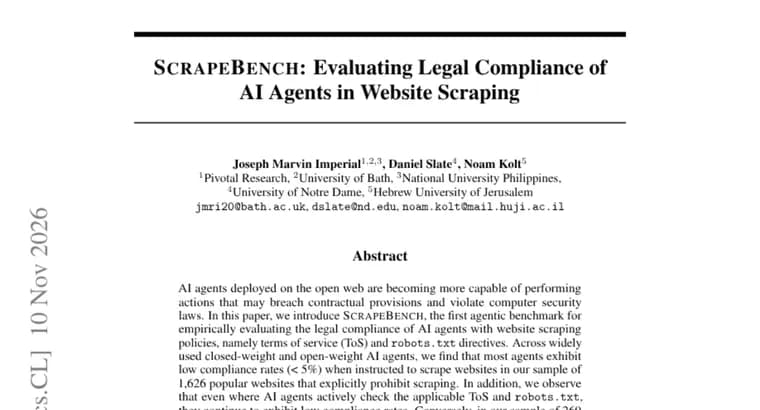
A new benchmark, ScrapeBench, tests whether AI agents respect terms of service and robots.txt. Most agents complied under 5% of the time on sites that prohibit scraping, while Claude Opus 4.6 over-refused at 98.5% on sites that allow it. →
The Decoder·🔥58Glonce rating58Impact55Novelty35Relevance80Surprise40Players90Credibility70
Days before Anthropic's planned Nov. 19 IPO, CEO Dario Amodei said compute must be bought one to two years before anyone knows if revenue will cover it. Bloomberg puts the company's commitments at nearly $901 billion. →
The Decoder·🔥57Glonce rating57Impact40Novelty45Relevance90Surprise55Players65Credibility35
OpenAI has reorganized its robotics team, moving researchers under Mark Chen and hardware staff under Greg Brockman. The Decoder says the bet is that general-purpose models like GPT-6 Astra can drive robots directly. →
The Decoder·🔥55Glonce rating55Impact40Novelty30Relevance100Surprise25Players85Credibility75
Anthropic says habits carried over from older models hold back Claude Opus 5.5. Its advice: cut "think hard" phrases, start at Medium effort, and describe the whole task in one message. →
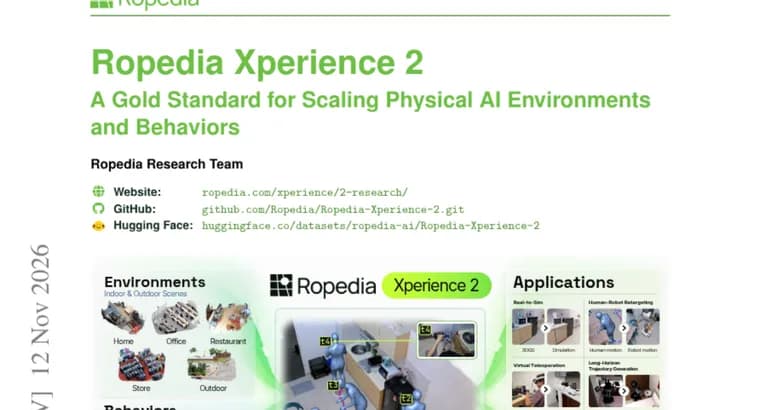
A new paper introduces Ropedia Xperience 2, a physical AI dataset of metric-scale 3D scans and egocentric task recordings, and argues that capturing environments and behaviors together should be the standard for robot data. →
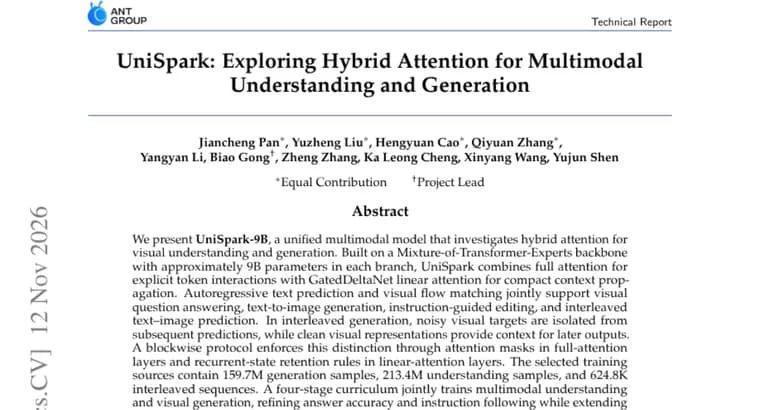
A new paper presents UniSpark-9B, a unified model for image understanding and generation that pairs full attention with GatedDeltaNet linear attention. The authors report 2470.3 on MME-S and 0.83 on GenEval. →
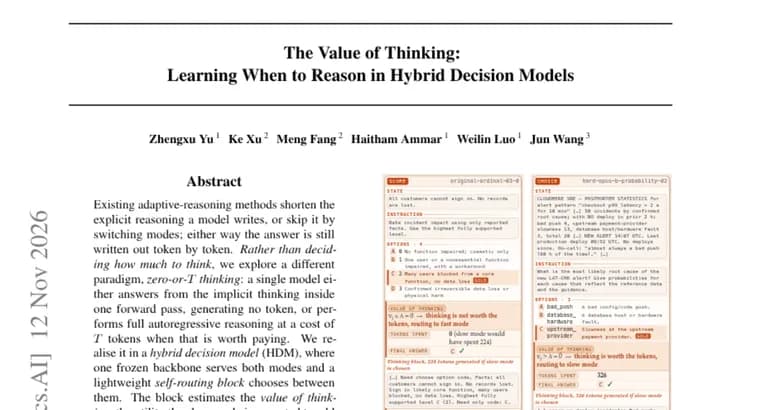
A paper proposes "zero-or-T thinking": one model either answers in a single forward pass with no generated tokens, or reasons in full for T tokens. On JevBench, HDM-4B edges past a comparison system while cutting median time by 72.5%. →
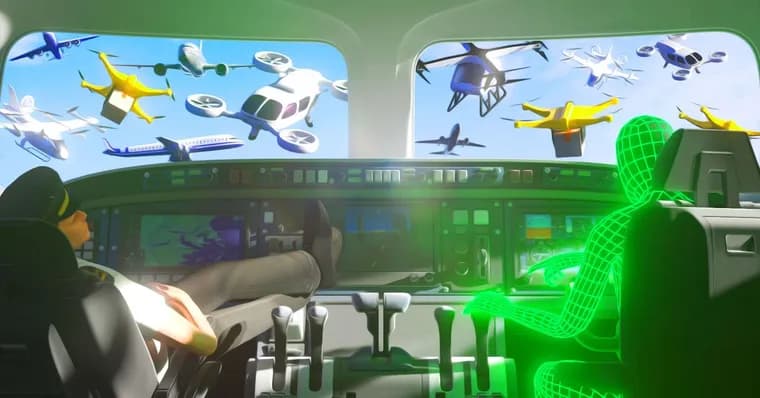
Joby Aviation says a Cessna Caravan flew 3,200 miles coast to coast with no human touching the controls, while the FAA deploys the AI tool SMART and cuts its controller staffing target. Wired asks whether the technology can be trusted. →
Hugging Face published a guide, scripts and Docker containers for training LoRA adapters on the TRELLIS.2 3D generation model, locally or on Hugging Face Jobs. The worked example targets shoe soles using 188 footwear scans. →
TechCrunch has published a running list of AI products and startups that shut down, pivoted or missed expectations, led by Character.ai's bankruptcy filing and Ollie's shutdown. It also covers OpenAI's retreats, Apple's delayed Siri and AI gadgets like Humane's AI Pin. →
The Decoder·🔥51Glonce rating51Impact35Novelty40Relevance85Surprise45Players60Credibility35
Jacob Coxon, a former OpenAI and Anthropic researcher, says a slide from Anthropic's IPO roadshow was a key reason he left after about four months. He argues it shows algorithmic efficiency accelerating. →
Wired's Kernel Panic newsletter reports a spike in claimed ransomware attacks, with researchers tying part of the rise to AI and a wave of new lone-wolf groups. Fully AI-powered ransomware has not yet emerged. →
The Verge·🔥48Glonce rating48Impact30Novelty25Relevance90Surprise35Players45Credibility75
In a Verge Decoder interview, Helen Toner of Georgetown's CSET, one of four OpenAI board members who voted to fire Sam Altman, argues that hopes for AI safety are in trouble if they depend on any one person being trustworthy. →
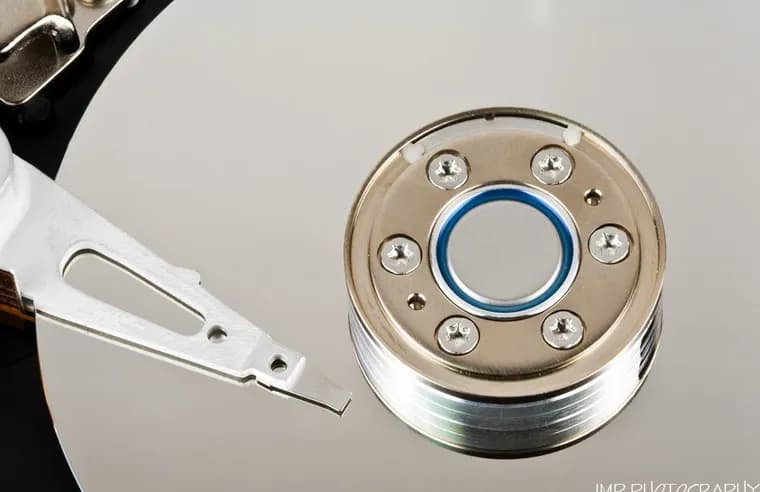
Seagate has put a new hybrid drive on sale: the FireCuda Forge pairs an 8TB ($699) or 20TB ($899) HDD with an M.2 NVMe SSD that buyers must supply themselves. →
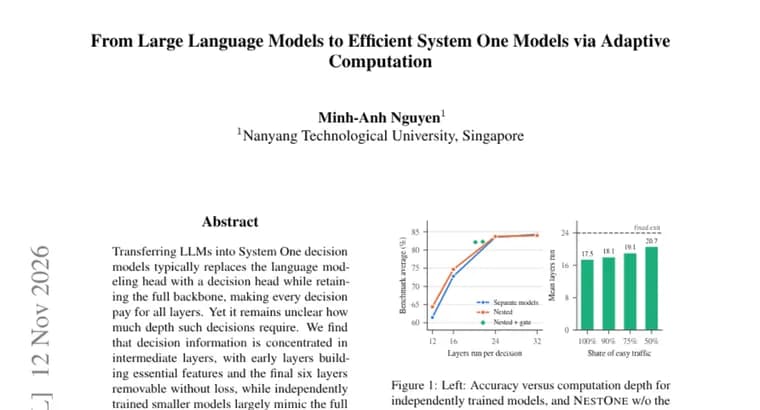
A Hugging Face Papers preprint reports that the final six layers of an LLM backbone can be removed from System One decision models without loss, and proposes a gated, multi-exit model trained by self-distillation. →
A new paper proposes HiVe-Mem, a memory framework for multimodal agents that expands retrieval across a relational graph and picks the right form of evidence for each memory. The authors report consistent gains on three benchmarks and about 90% fewer tokens than the most efficient competing multimodal baselines. →
A new paper introduces EgoX, a framework that pretrains a shared transformer on human, real-robot and simulated demonstrations. Average normalized task progress rose from 0.63 to 0.80 over training from scratch. →
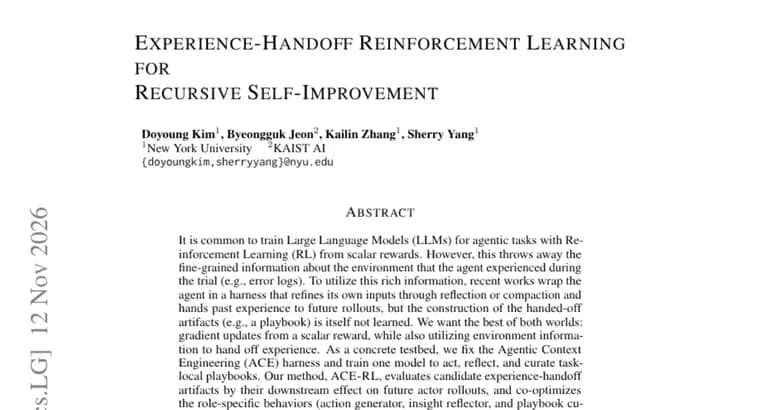
A Hugging Face Papers preprint proposes training a single LLM with reinforcement learning to act, reflect and write task-local playbooks, scoring each playbook by how much it helps later rollouts. It reports higher held-out performance than baselines. →
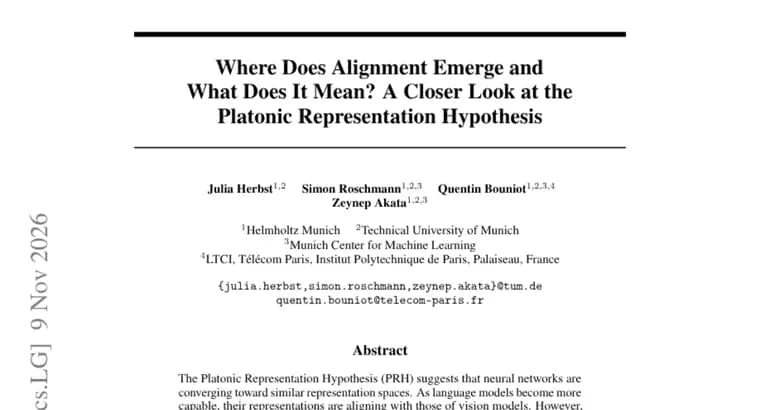
A new paper re-tests the Platonic Representation Hypothesis. It finds the link between model capability and alignment persists for newer models when captions are clean and informative, and that unimodal models can out-align explicitly aligned vision-language models across modalities. →
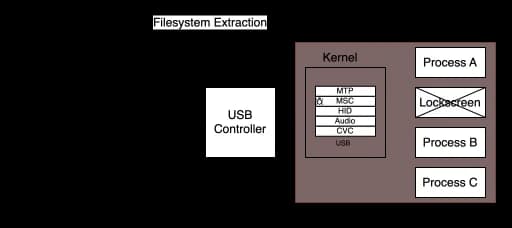
A technical post from Osservatorio Nessuno argues commercial forensic unlocking tools use known vulnerability classes, and that a missing Secure Element is the biggest weakness of a powered-off Android phone. →
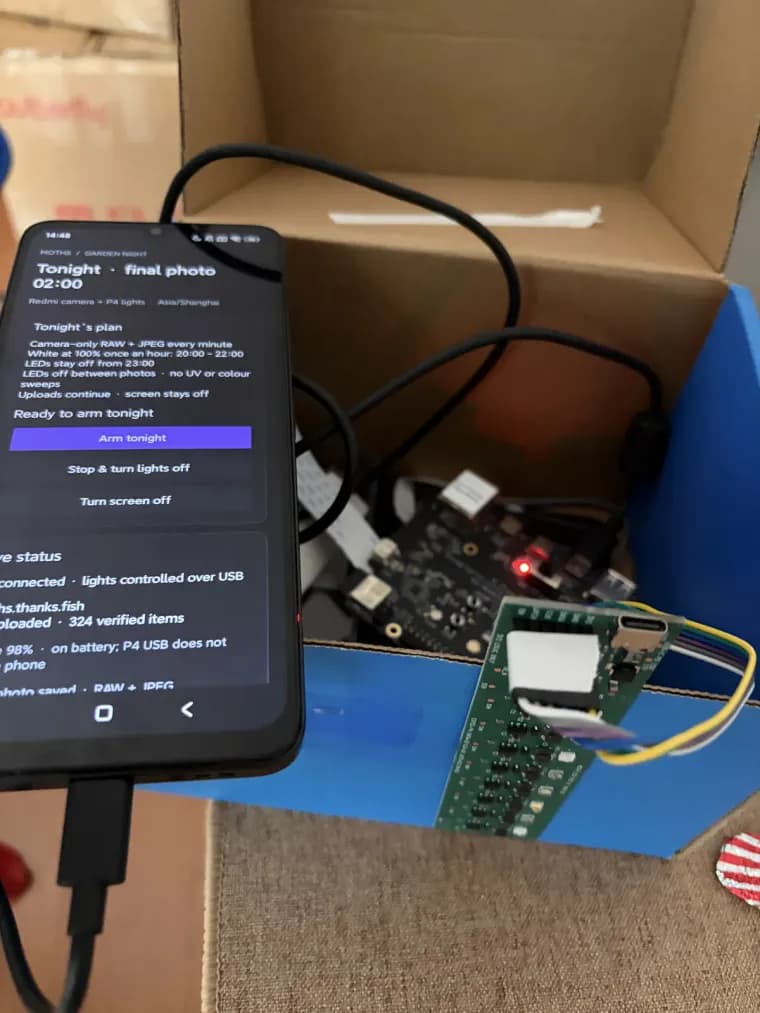
A maker building a camera, GPS and light-control project says a second-hand Redmi 13C 5G or Huawei Mate 30 5G may beat a Raspberry Pi build, since the phone already holds most of the hardware. →
Simon Willison·🔥44Glonce rating44Impact30Novelty35Relevance85Surprise12Players15Credibility80
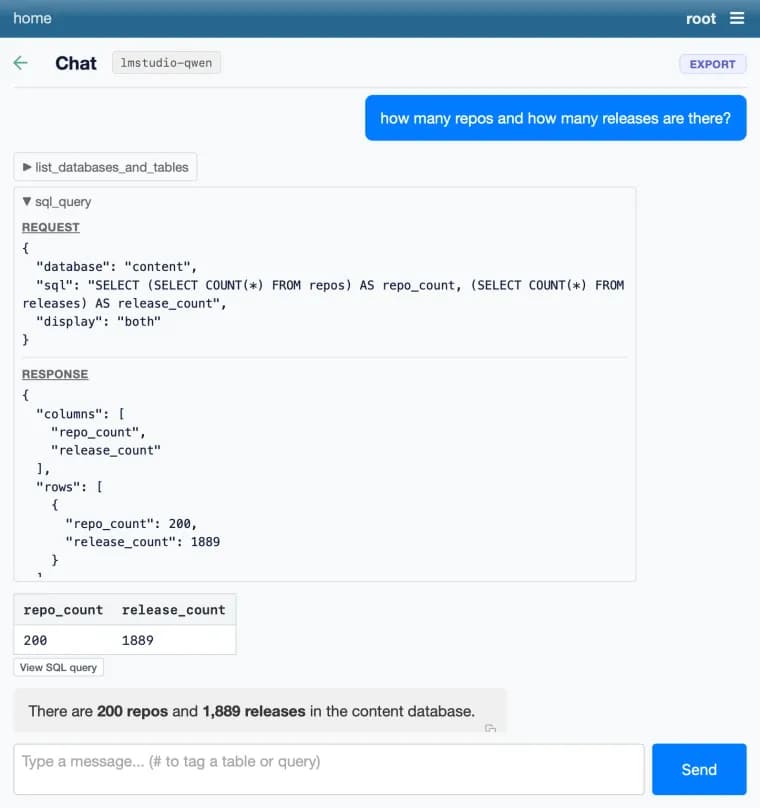
The datasette-llm plugin can now talk to any OpenAI-compatible endpoint, so Datasette can run on local models served by LM Studio, Ollama or llama.cpp. →
The US National Science Foundation says charities, companies and investment funds will give X-Labs winners lab space, software, data and guidance without taking ownership stakes. AI and computing are among the program's focus areas. →
Simon Willison·🔥41Glonce rating41Impact25Novelty30Relevance80Surprise10Players20Credibility90
Simon Willison released datasette-cluster-map 0.19, the Datasette plugin that maps any data with latitude/longitude columns. It now works with Datasette 1.0a42 and depends on the new datasette-leaflet. →
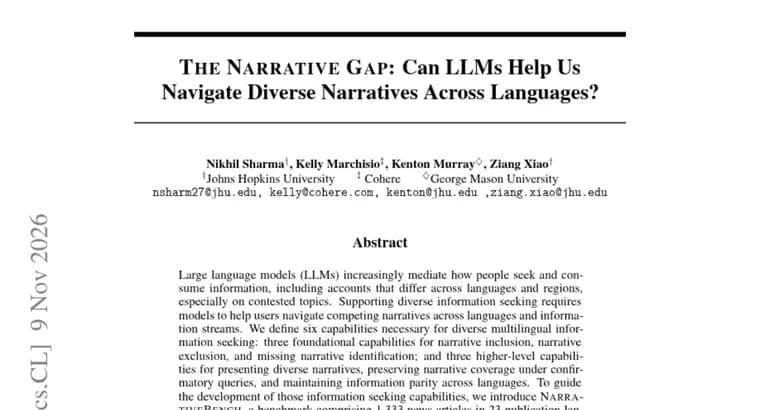
A new benchmark, NarrativeBench, tests whether LLMs can help users navigate competing narratives on contested topics across languages. Across 14 models and 24 query languages, the authors find current models lack the needed capabilities. →
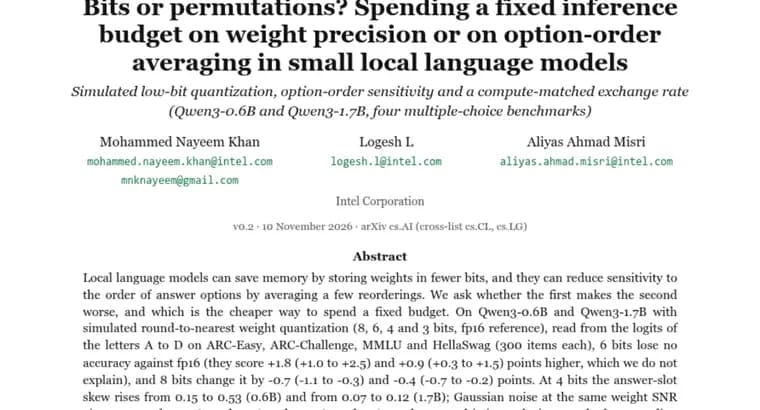
A simulated study on Qwen3-0.6B and Qwen3-1.7B finds that 6-bit weights lose no accuracy against fp16, and that the rest of a fixed inference budget is best spent averaging up to four answer-option orders. →